
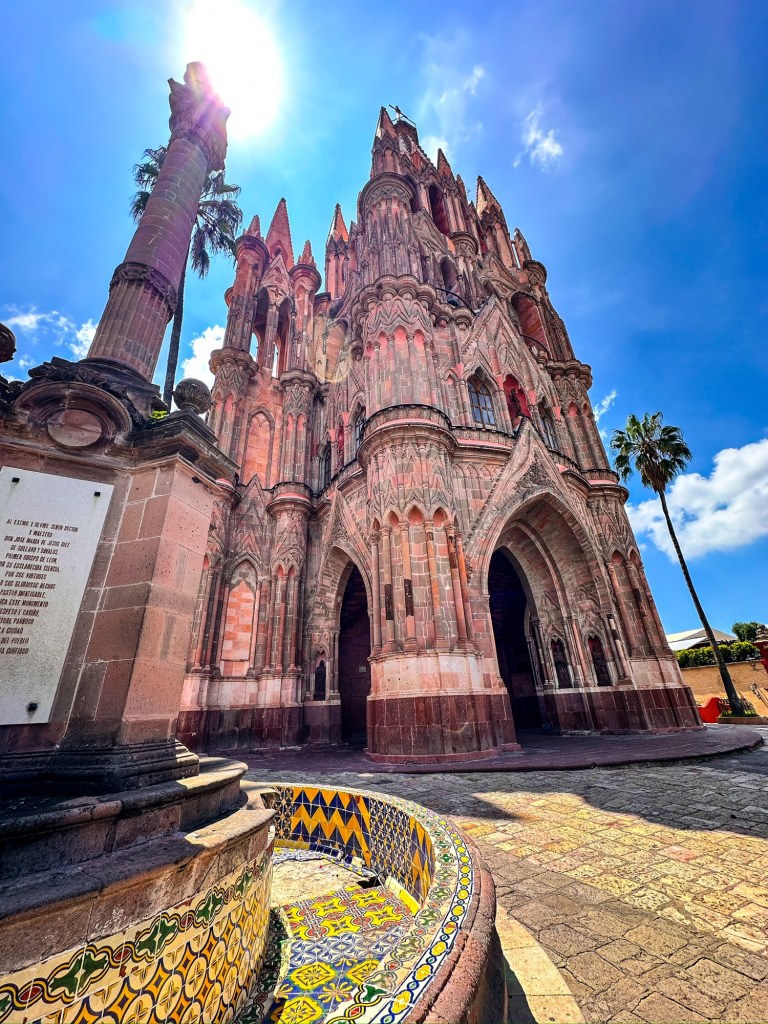
Coastal elite alert: I love me some Travel + Leisure and Condé Nast Traveler magazines. Nowadays, people can easily find out about travel hot spots through tiktok and Instagram but because I am someone who actually likes to create collages out of magazines as a fun manifesting activity, I sometimes frequent the Condé Nast editorial voice for dreaming up my next travel destination.
San Miguel de Allende has consistently been picked by these magazines as the best town in the world. Yes, it was voted the #1 city in the world! This beautiful colonial town is 4.5 hours north of Mexico City and its nestled in the high desert valley of the state of Guanajuato. It’s known for amazing sunny weather, arts and architecture, and an expat community from all over the world, especially from the US and Canada. Indeed, the reputation of San Miguel de Allende (or SMDA) as a UNESCO world heritage site is well-known among the international travelers. Ironically, Mexican nationals gravitate to other (and less expensive) towns over SMDA for travel. Indeed, I personally didn’t really know much about this town until I watched the HGTV International House Hunters episode that featured Americans buying property in this town. I was intrigued.
In the 1930s, wealthy Chicagoan and art student Stirling Dickinson arrived to SMDA and helped to revitalize the art scene, later recruiting fellow Americans to the San Miguel de Allende Art Institute, including WWII veterans who enrolled in the Art Institute for free using their GI Bill. Time Magazine would later call San Miguel de Allende a “G.I. Paradise.” In the 1960s, a few of the famous writers from the Beat Generation, including Jack Kerouac and Allen Ginsburg, would visit SMDA, thus sedimenting an American bohemian romanticization of this unique Mexican town.
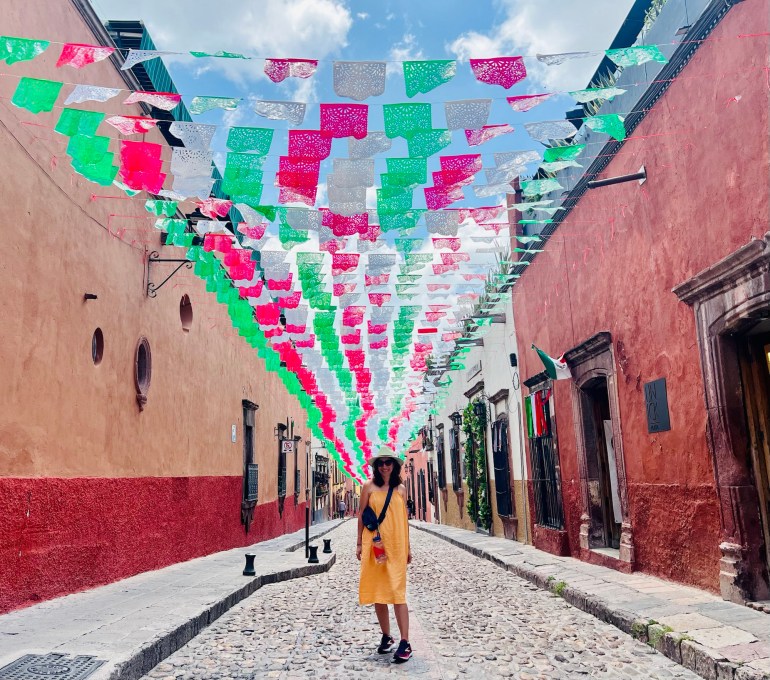
But if you look beyond the current touristy reality of SMDA, you’ll see that it has a deep history that connects it to the days of the Spanish Empire and Mexican Independence. Indeed, the town’s hero Ignacio Allende played a pivotal role in this history as he flouted his role as a Spanish captain to fight on the side of Mexican Independence. Talk about rebel! Later killed and branded as a traitor, Allende’s legend is represented and honored in this colonial town.
This September I was lucky to receive an invitation to visit this region from one of my best friends–Jennifer and her husband Manuel who were staying in the city of Querétaro, Mexico with their uncle for a few weeks as part of their year-long sabbatical. I flew into Querétaro, Mexico from SFO (and Houston) which I highly recommend since Querétaro is only a 1-hour drive away from SMDA. I had a blast not only because of the town’s objective beauty, but mostly because I had the company of amazing friends who also happened to be Mexican history buffs.
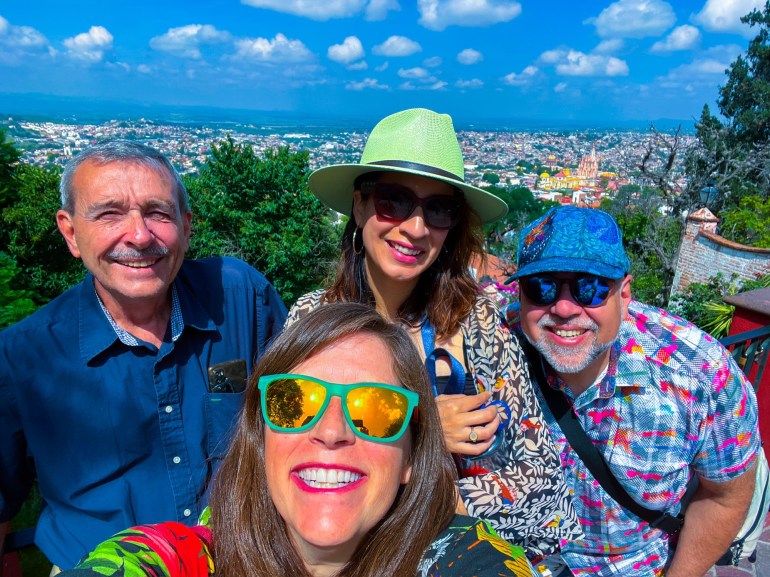
Indeed, as you’ll see below, if you ever travel to SMDA, you’ll be delighted by the town’s architectural beauty as well as it’s cultural offerings, even if you can’t help be struck by the interplay of colonial and anti-colonial histories surrounding you as you walk through the quaint cobbled-stone streets.
A little bit of Bay Area in SMDA?
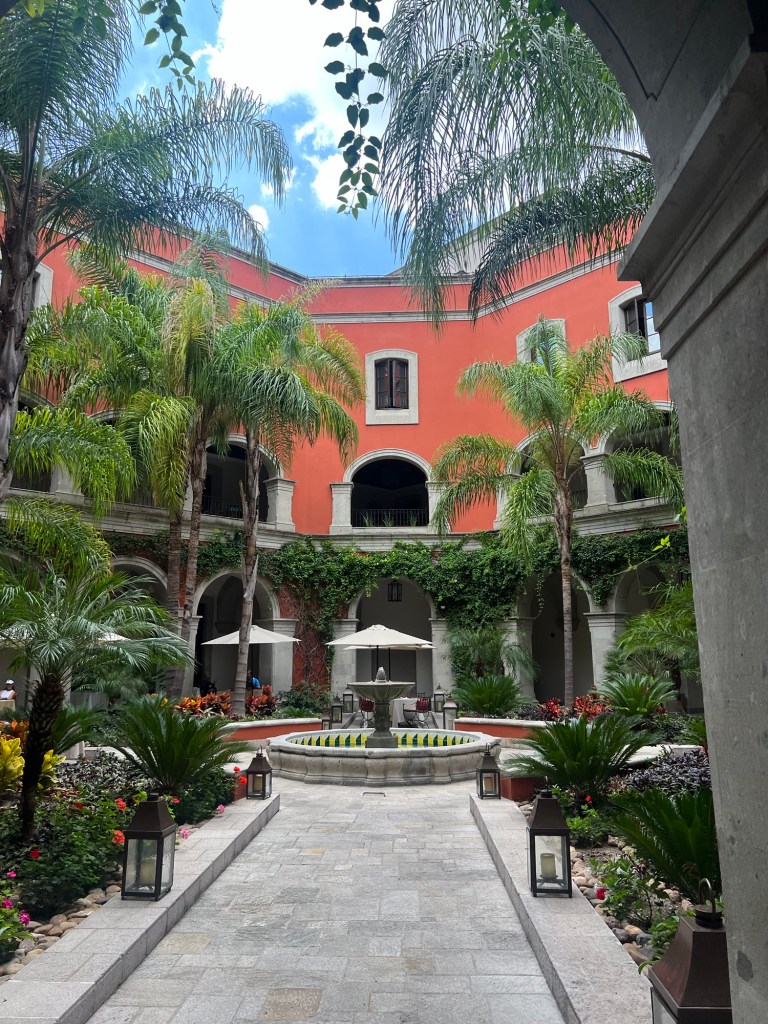
We drove into SMDA on a Thursday morning after the Sept 16th Mexican Independence celebrations. This was a smart move because arriving after the Mexican independence celebrations means low-tourist season. Since our Airbnb was not quite ready in the morning, we decided to grab lunch at the Rosewood San Miguel Hotel, a five-star hotel which strangely enough also exists in the United States just a few miles from where I work in Stanford, CA. First sign of global gentrification: you travel thousands of miles away from the Bay Area just to find yourself having lunch at a lux hotel chain that exists right down the street from your work.
So why on Earth would we go there? Because it turns out that the Rosewood San Miguel is housed in one of the biggest and oldest renovated 16th century Haciendas in town. The Hacienda sits on a five-acre property, featuring lush gardens and grounds, architectural designs, and an amazing rooftop restaurant overlooking the valley. How could we not go?! Click on the slideshow below to see a few photos of the view.
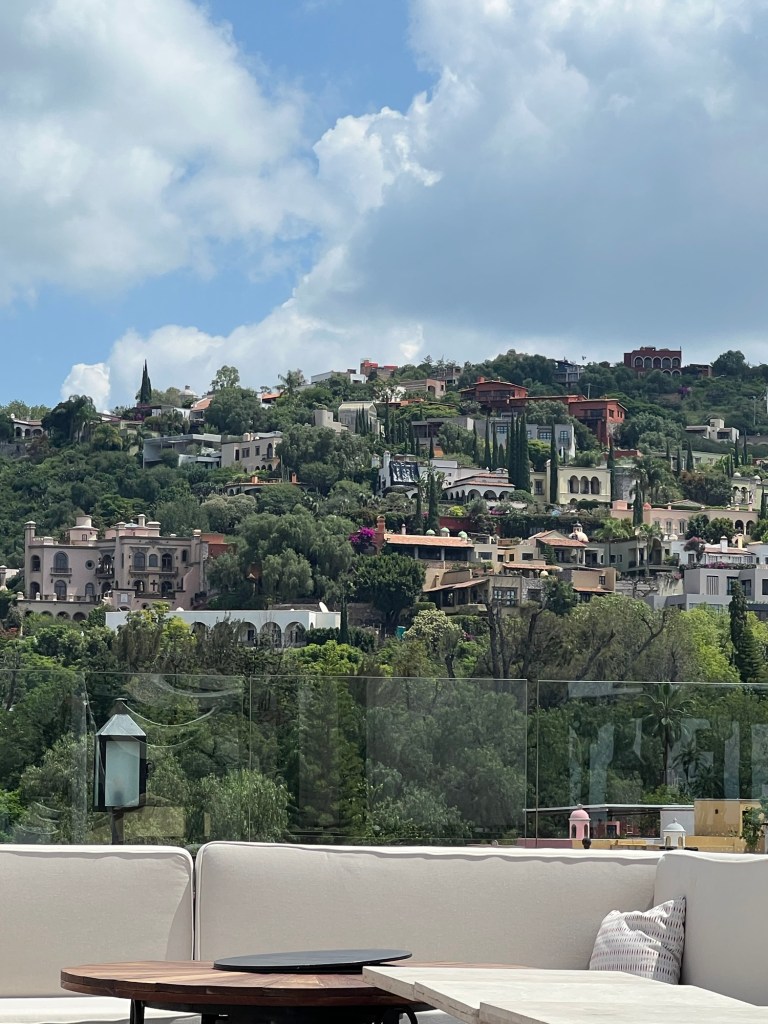

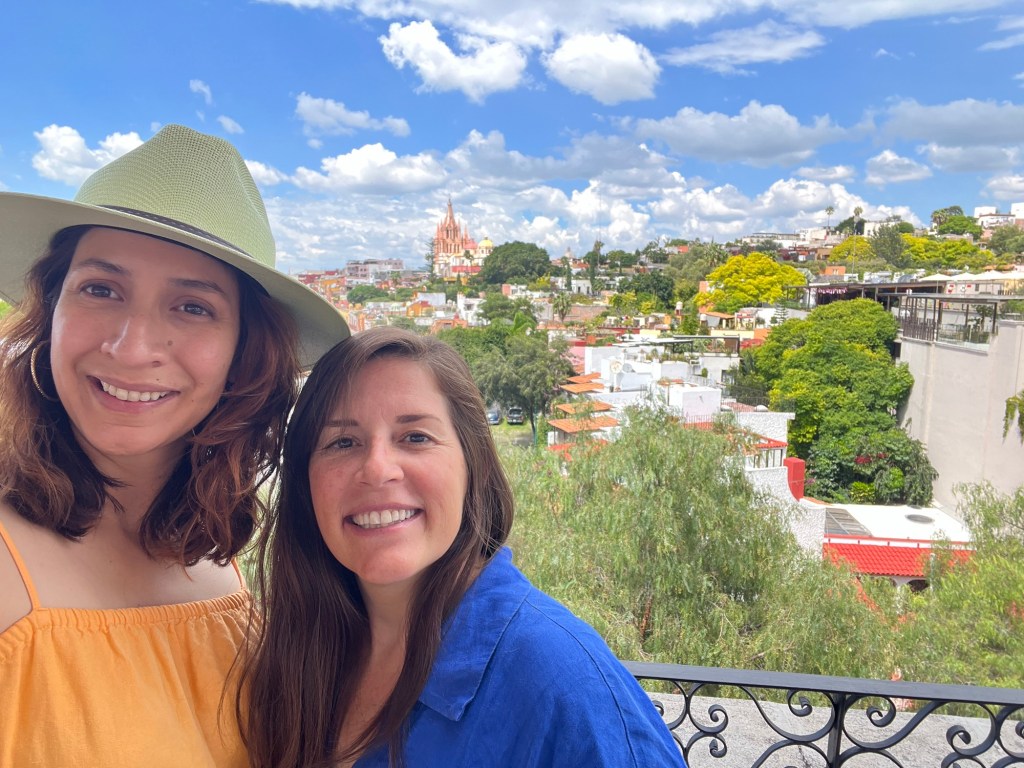
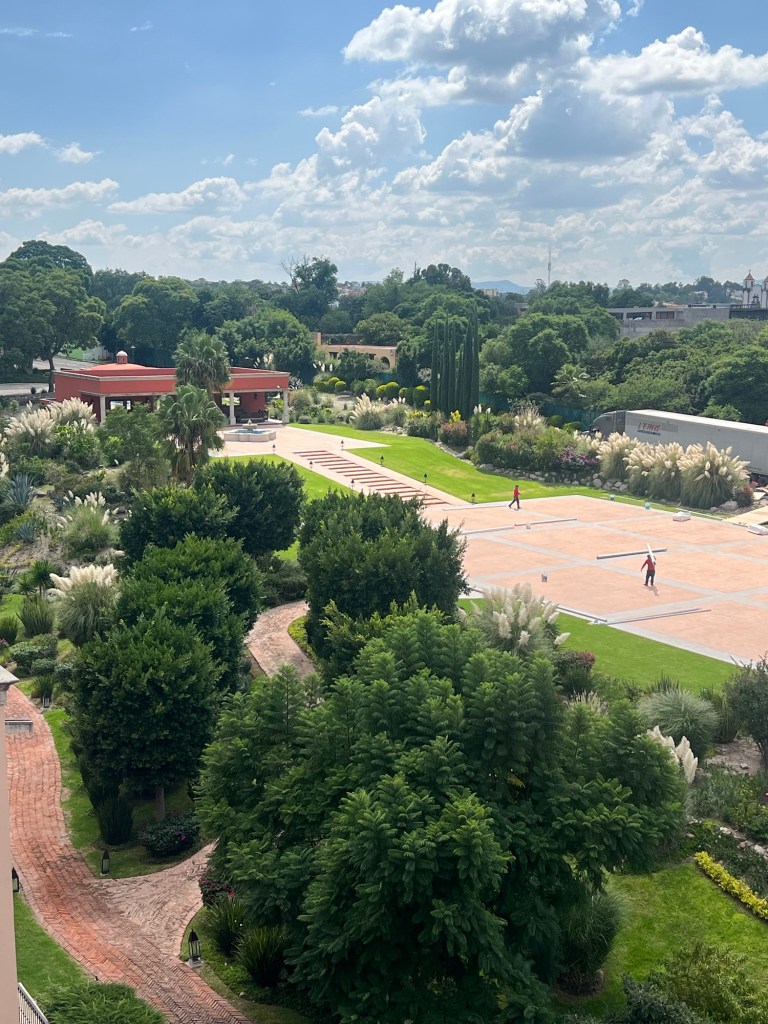
The Rosewood rooftop restaurant is called Luna–where you can enjoy a nice cocktail and high-quality bites while enjoying the amazing view of the hills, so do make reservations. You can also grab a view of the Hacienda’s gardens where I was told they host many weddings. Seeing an architectural gem and the natural beauty of this valley is a great start to your trip here. Oh, and by the way, SMDA (similar to Querétaro’s historic center) is known for having many rooftop restaurants and bars, so be sure to bring your hats and sunglasses.
Fatima Rooftop Restaurant

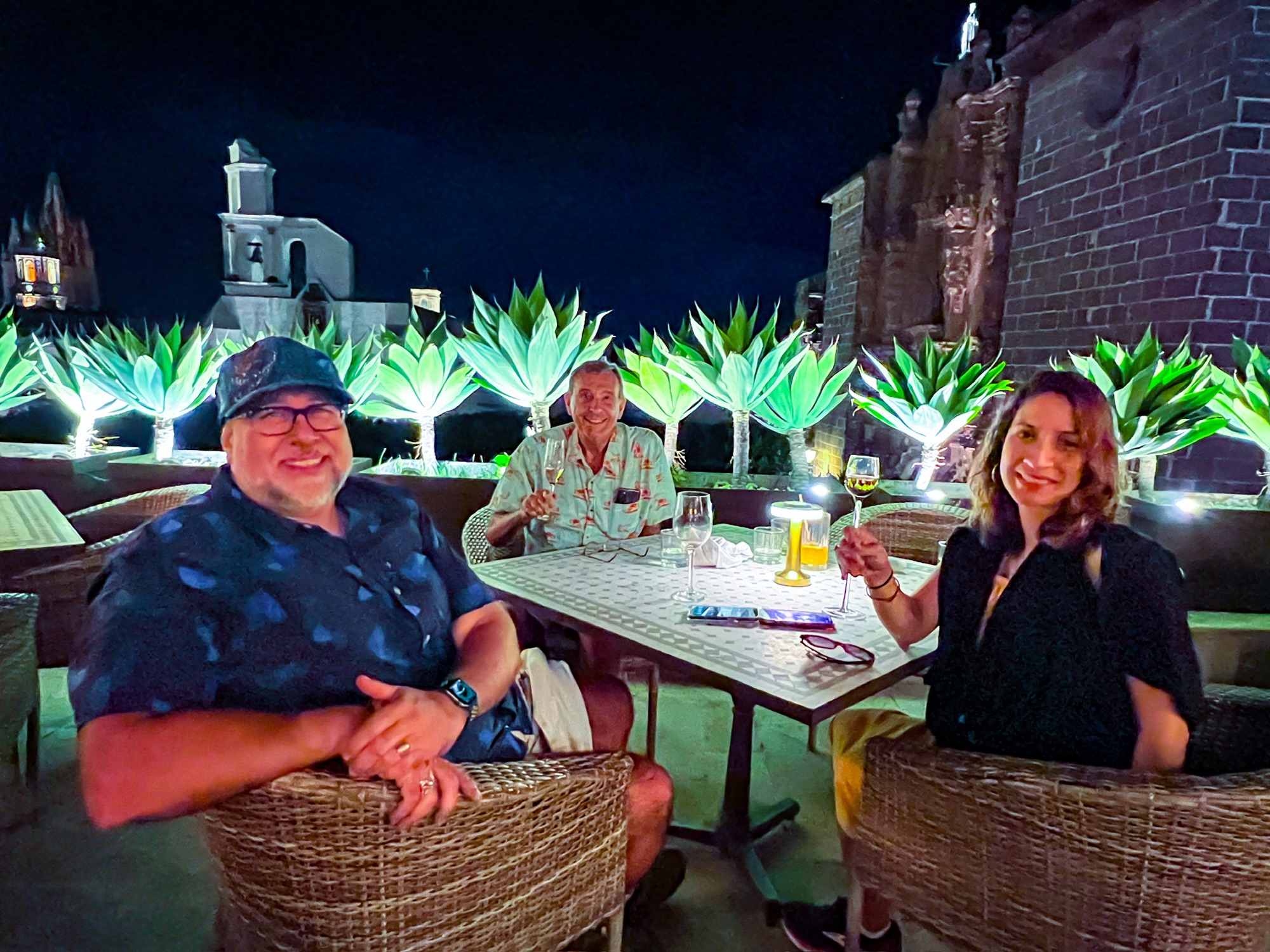
Luckily we were traveling with Jennifer and Manuel’s uncle Greg who had some great recommendations for rooftop bars. He introduced us to Fatima 7 which happens to have one of the best views of SMDA and of the Church Iglesia de San Francisco. You will see a breathtaking view of the sunset and at one point we actually saw a flash of lighting. We are in the highlands after all. The food was delicious and we enjoyed a nice sip of refined tequila as a night cap–it was “que fancy” as they like to say! We definitely recommend this restaurant in the evening for the dramatic views of the sierra and church.
Churros for Dessert
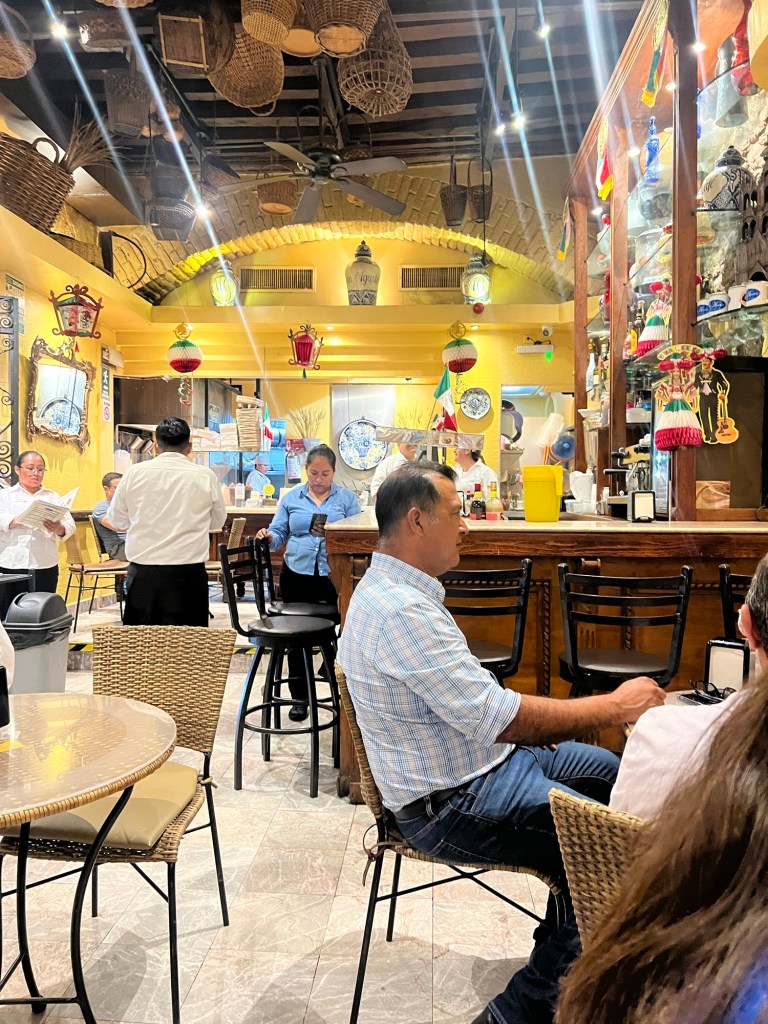
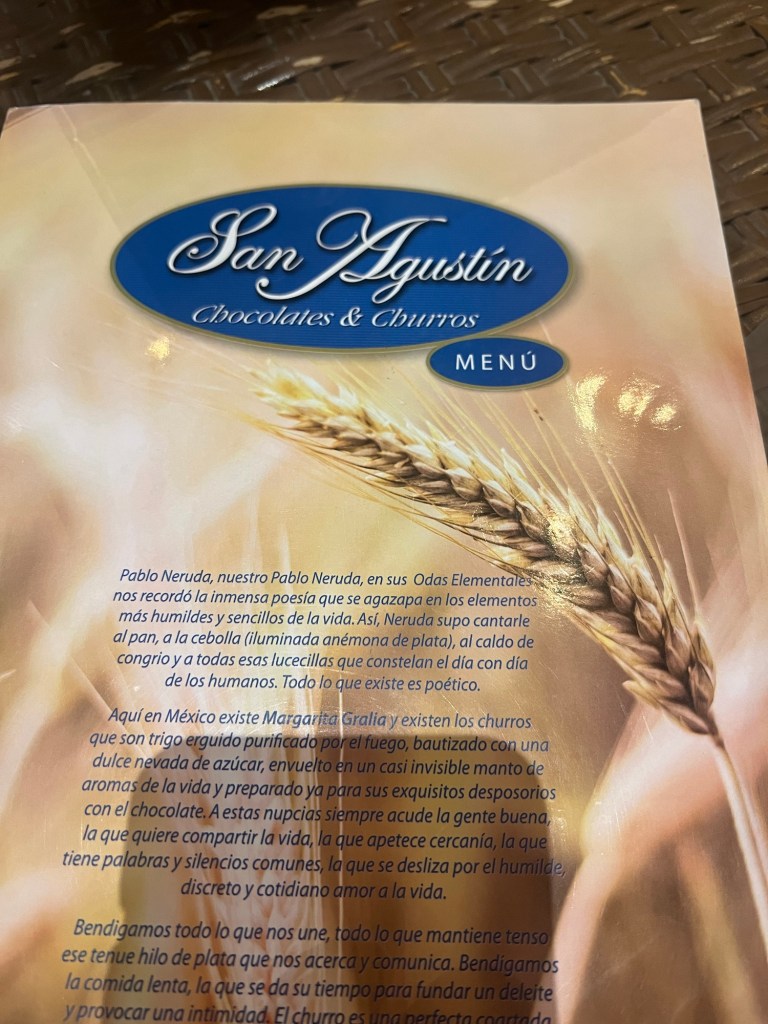
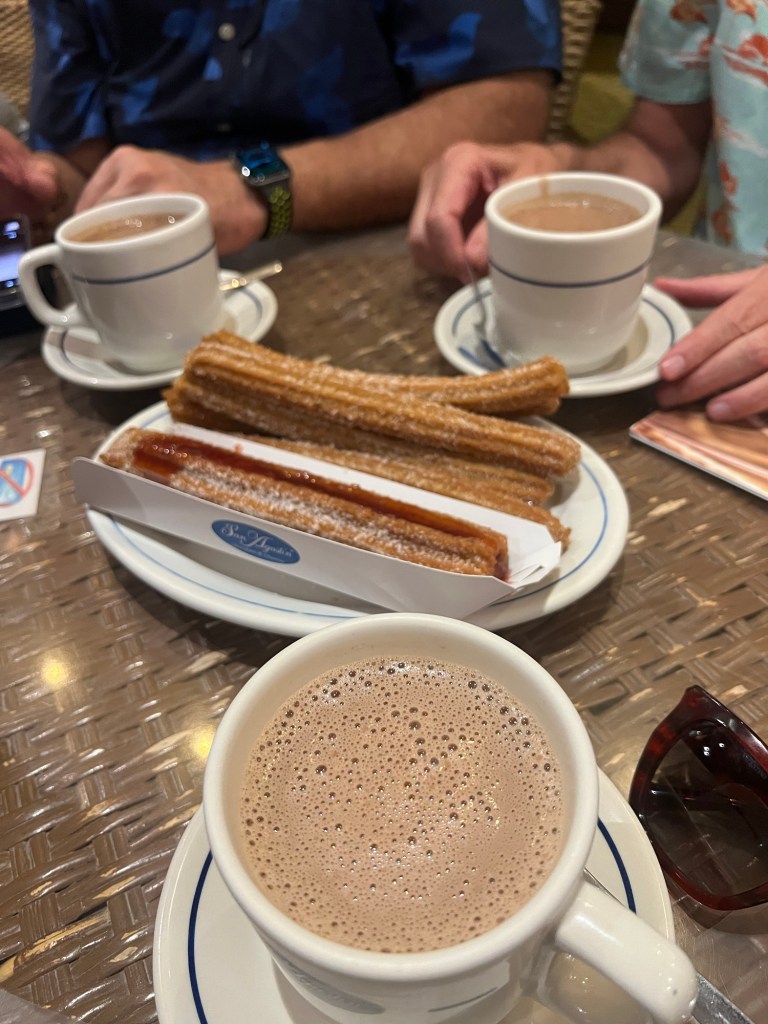
How can you be in Mexico and not have churros? This is the question I asked myself after a full dinner. I really didn’t need them, but did I want them? Yes. Well, just across the Fatima restaurant you’ll find the most popular spot for churros: San Agustin Chocolates & Churros. There are plenty of tables for your party and an attentive waiter will be there to take your oder of Churros and hot chocolate. You can have your churro the classic way (without the filling) or with chocolate, Nutella, creme and strawberry. You can’t go wrong with any of these choices and I highly recommend splitting an order of Churros since three is more than enough–especially after dinner.
Morning activities: Lavanda Café and the Artisanal Market
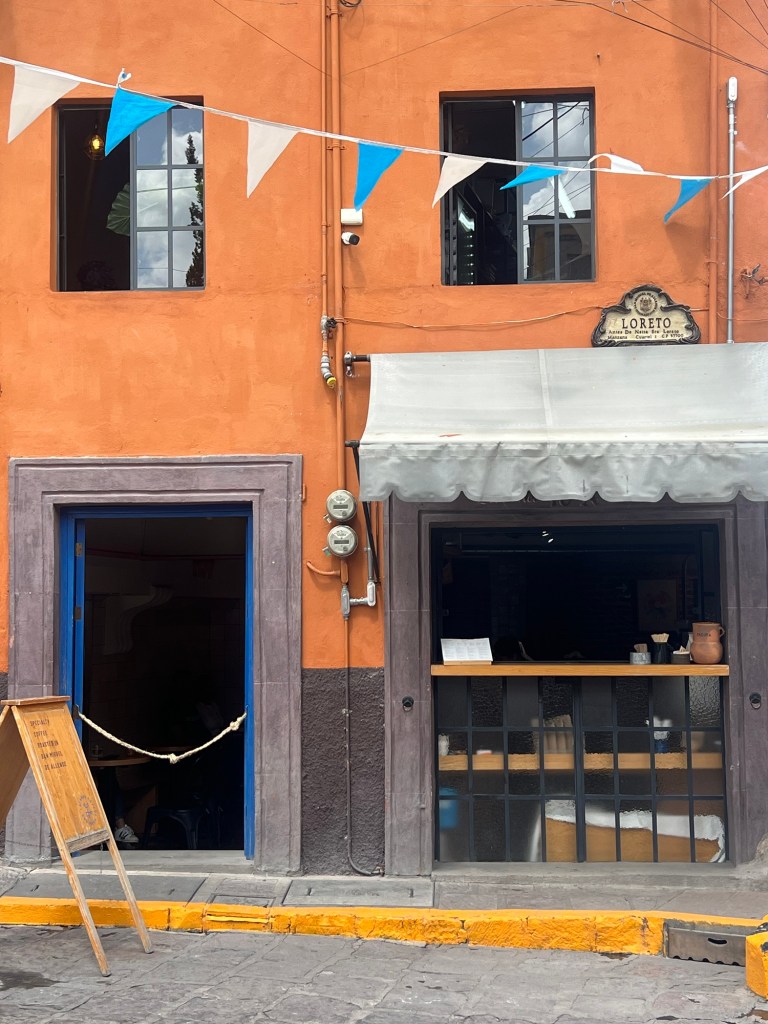
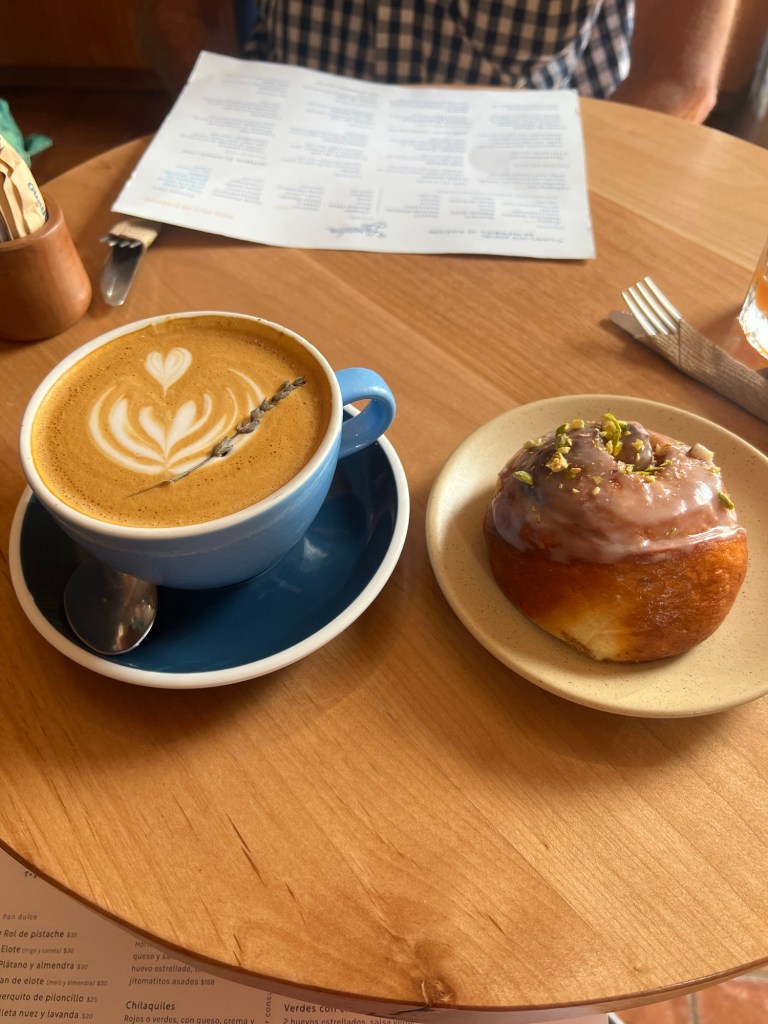
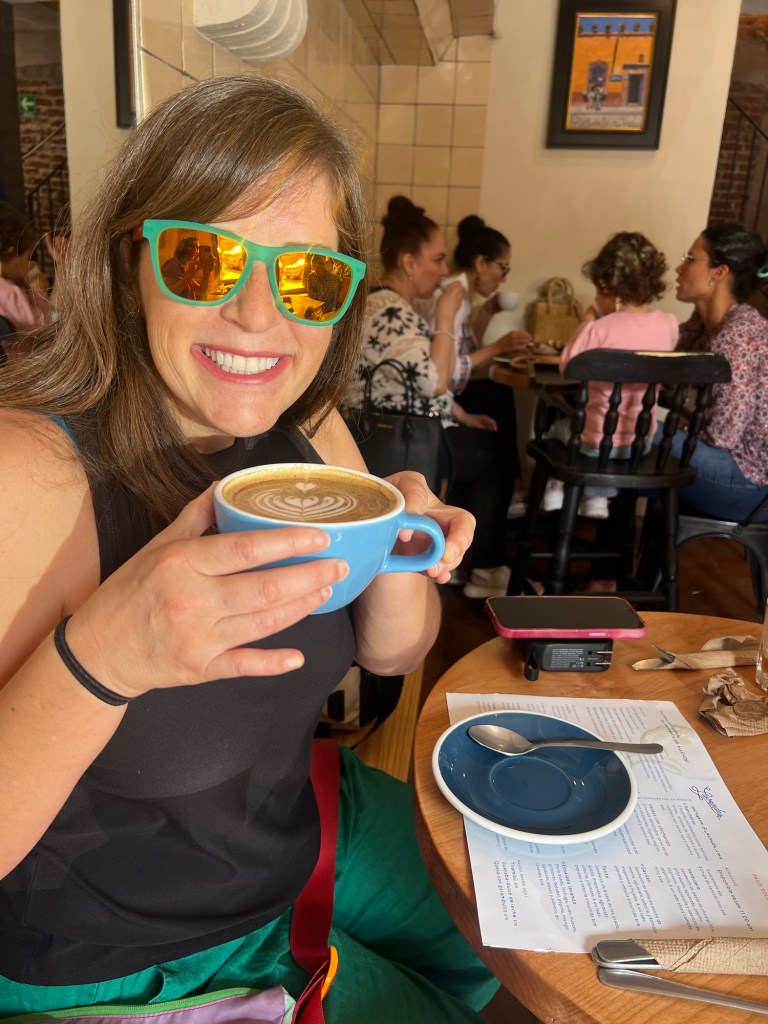
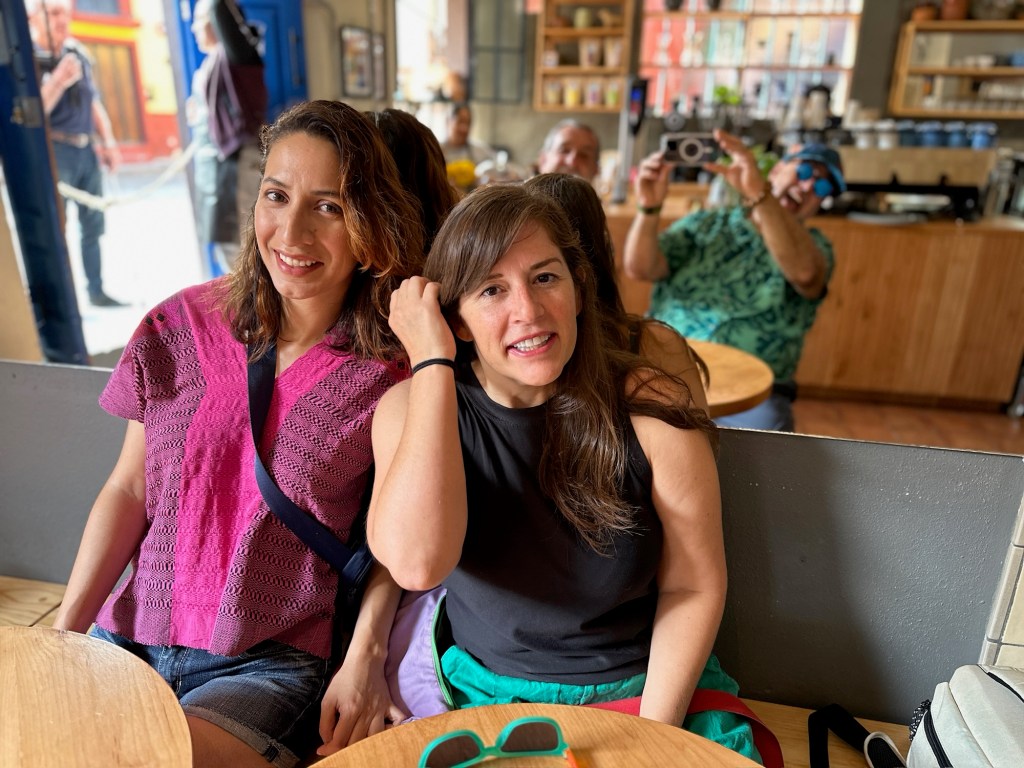
Grab some breakfast at Lavanda Café, a local favorite where you are amongst Mexican nationals and San Miguel natives who love their local coffee shop. Sometimes the best places are actually away from the tourists and in smaller and unassuming venues. But while the façade of Lavanda may portray a simple local café, once you walk in there, you’ll see the coffee baristas working hard preparing the perfect cups of artisan coffee. And they present your individual coffee with a postcard describing the coffee farmers and the location of the bean. While the coffee is the main draw, the food is also on point. We recommend the delicious pastries and Chilaquiles!

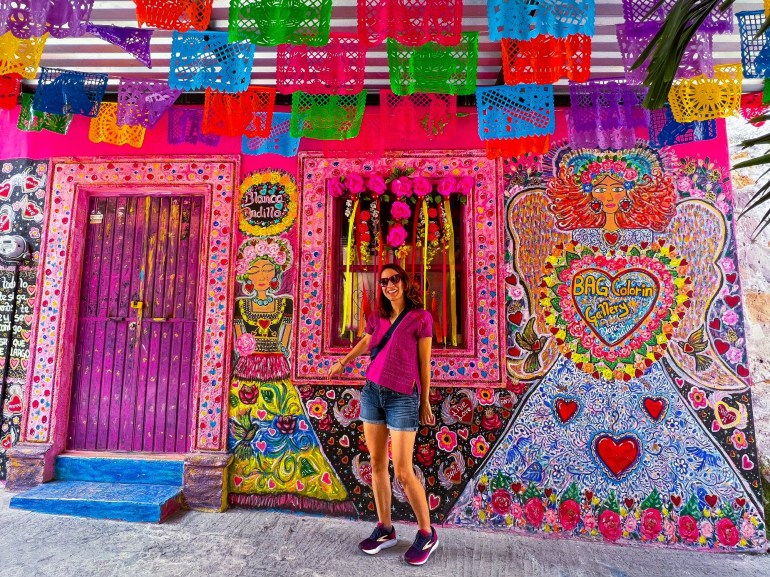
After breakfast, I recommend you just walk across the street and check out the artisanal market where you can buy everything from jewelry, leather handbags, interior home decor, lanterns and traditional Mexican clothing. If you walk along the street for a few blocks you will come across a colorful portion of the street where you are suddenly enveloped by bright pinks and the traditional Mexican Papier–mâché called “papel picado.” As someone who loves to wear pink, I was in critical chica color heaven!
Arte, Cultura, y Música!
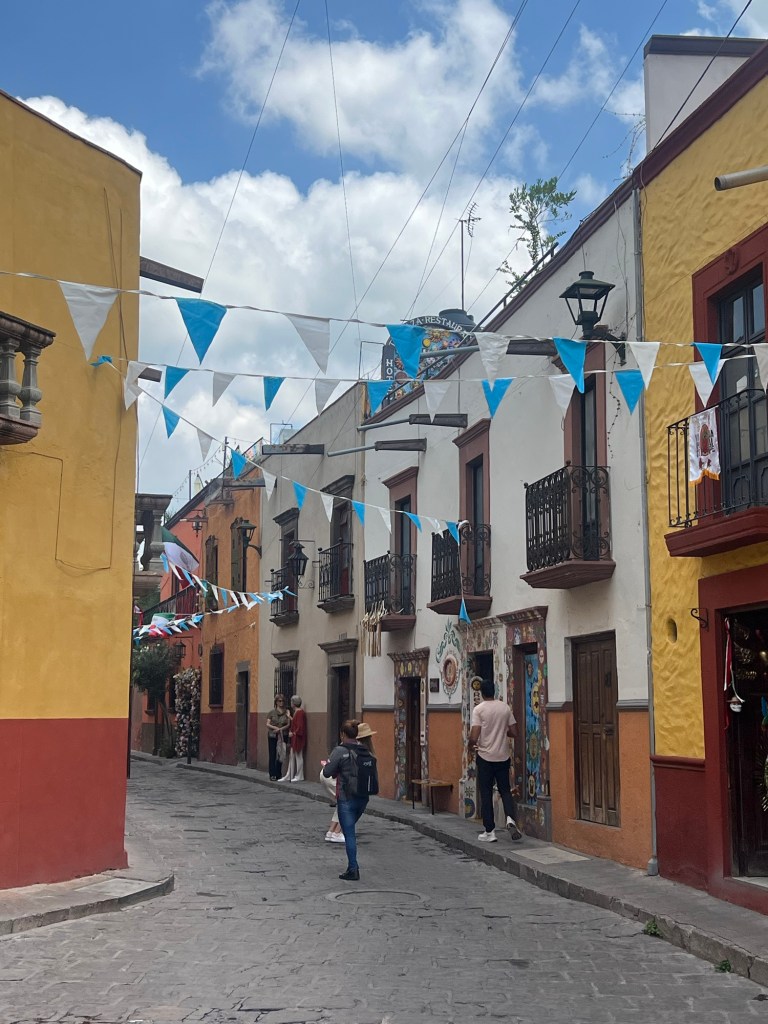
San Miguel de Allende is picturesque. You can see art and beauty all around you just walking through the narrow cobblestone streets. I shot the video below so you can get a glimpse of the colorful colonial structures that currently serve as boutique shops, residences, restaurants, and hotels. Because the weather is very spring-like, you are bound to see flowers and bougainvillea adorn some of the doors and entryways. The only thing that was a slight inconvenience was the very narrow sidewalks (that’s how they made it back then)–so make sure you have good walking shoes when roaming the town. Also, if you are someone who appreciates fine wood carving, you’ll be pleased to find beautiful wood-carved doors and amazing furniture stores. If you want straight up art, be sure to walk over to the art institute or Escuela de Bellas Artes where you will find a optical illusion mural by the world-class muralist David Alfaro Siqueiros. If you want to know more about the contemporary SMDA art scene, you may need to walk a bit further out to La Fabrica la Aurora and old textile factory. You can easily spend a few hours there checking out the different art galleries but don’t worry they have a great cafe there to grab yourself some lunch after browsing through tons of art.
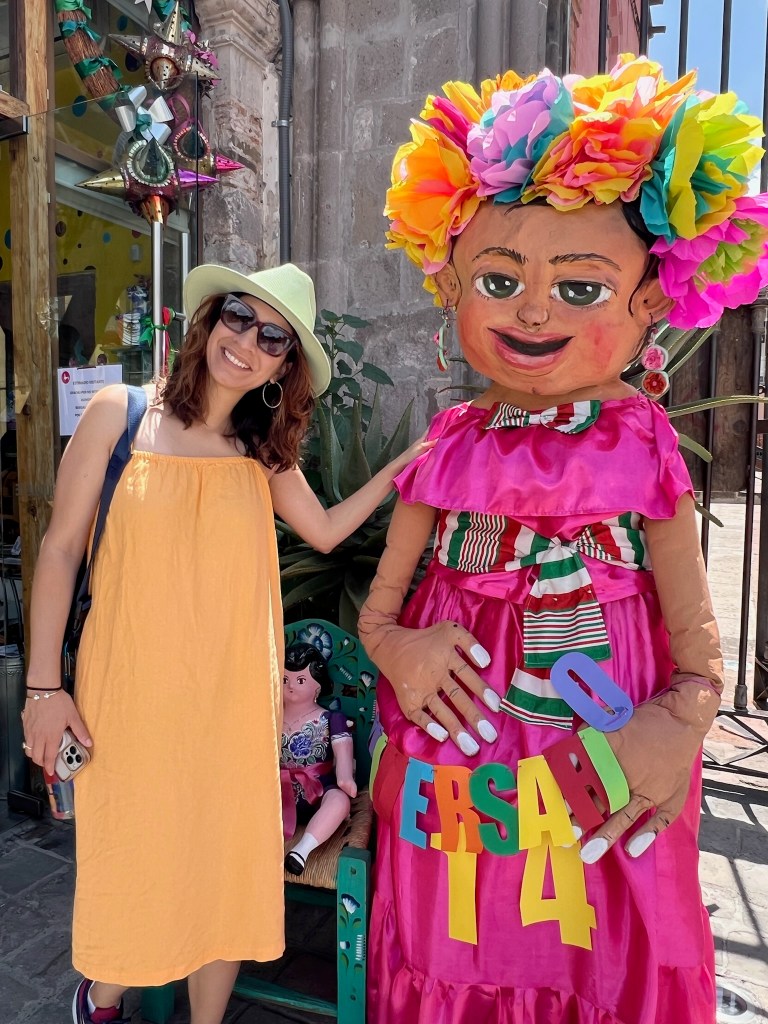
Apart from the architecture and art scene, you will also come across another iconic cultural staple of this town: the Mojigangas. Below, I took a picture with a miniature size papier-mâché doll because the authentic Mojigangas can actually be quite tall–they stand as tall as 6ft to 18ft feet tall! They are held up by individual performers on stilts and are present during city celebrations or weddings. If you go to the center plaza in front of the church, you’ll be sure to run into them.
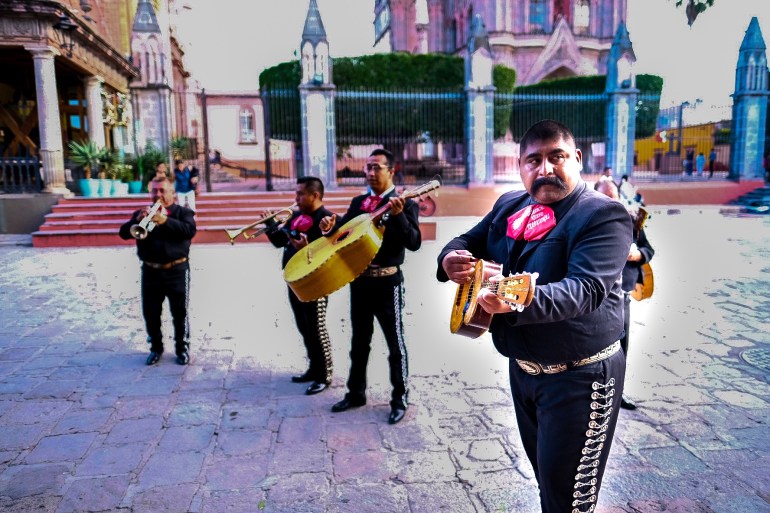
You will find yourself time and time again gravitating toward the town center/main plaza. It’s a lively plaza not only because of the Mojigangas and the view of the pastel pink church, but also for the Mariachi music that you will hear during the day and in the evening. Many people sit on the benches for hours just to listen to the Mariachi play the classic mariachi songs. I actually love Mariachi music so I asked them to play the classic song “Guadalajara.” Manuel took a cool photo of the Mariachi quartet playing and you can see them play with their classic outfits. If you want to get some requests in for your song, don’t forget to bring some extra cash.
Que Fancy: Going to a Michelin-star restaurant on the last day
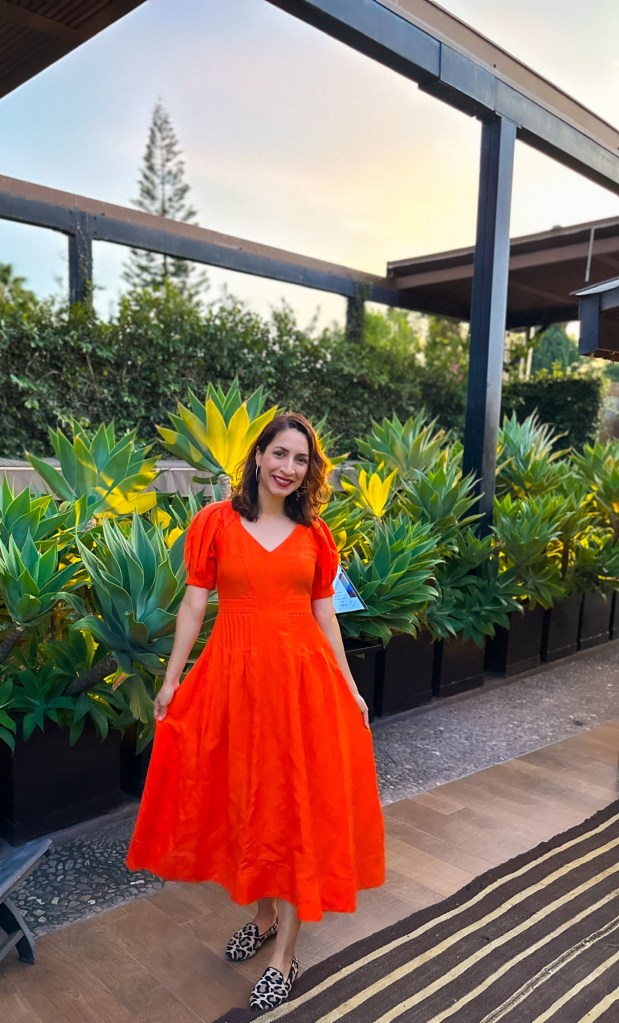
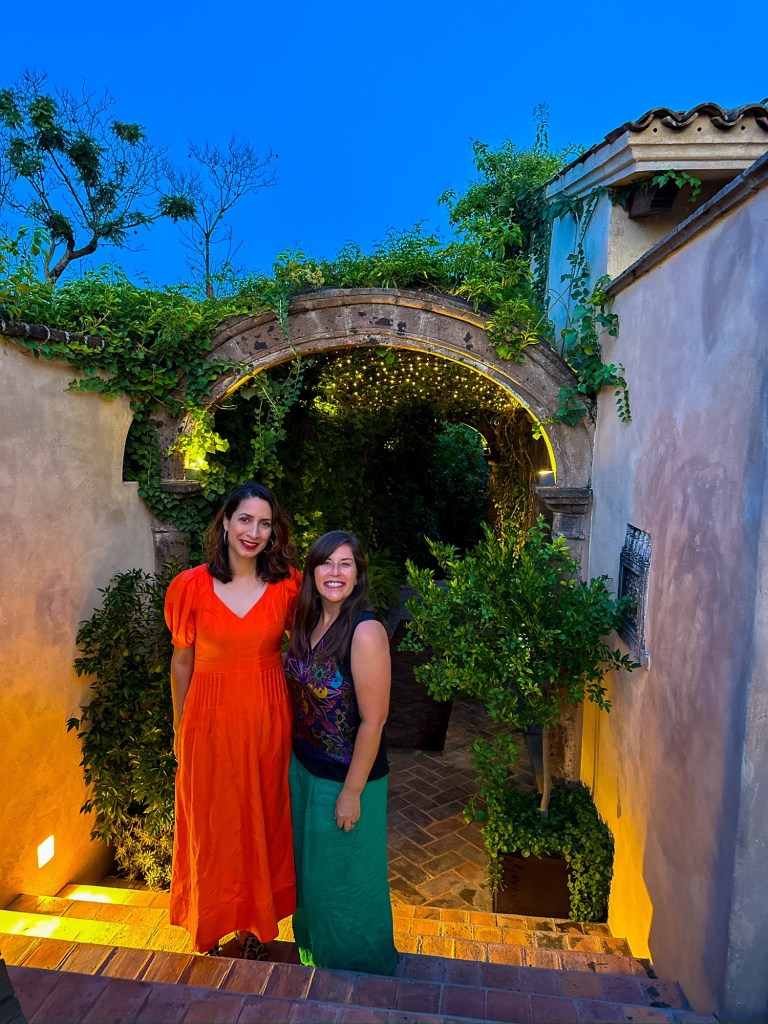
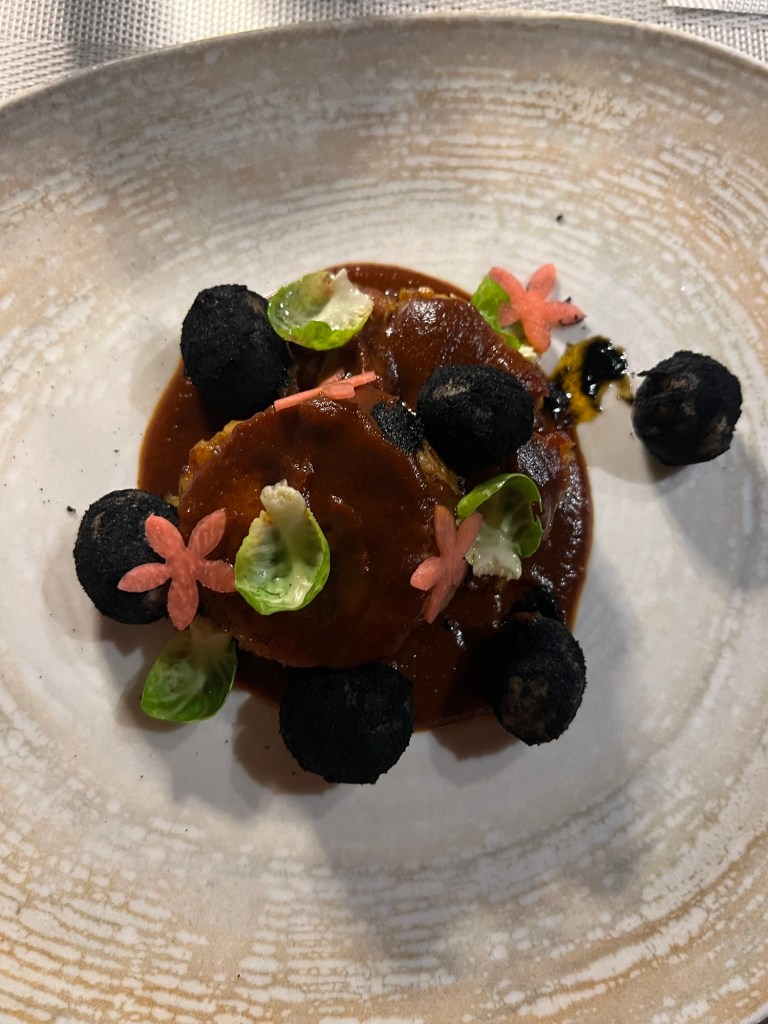
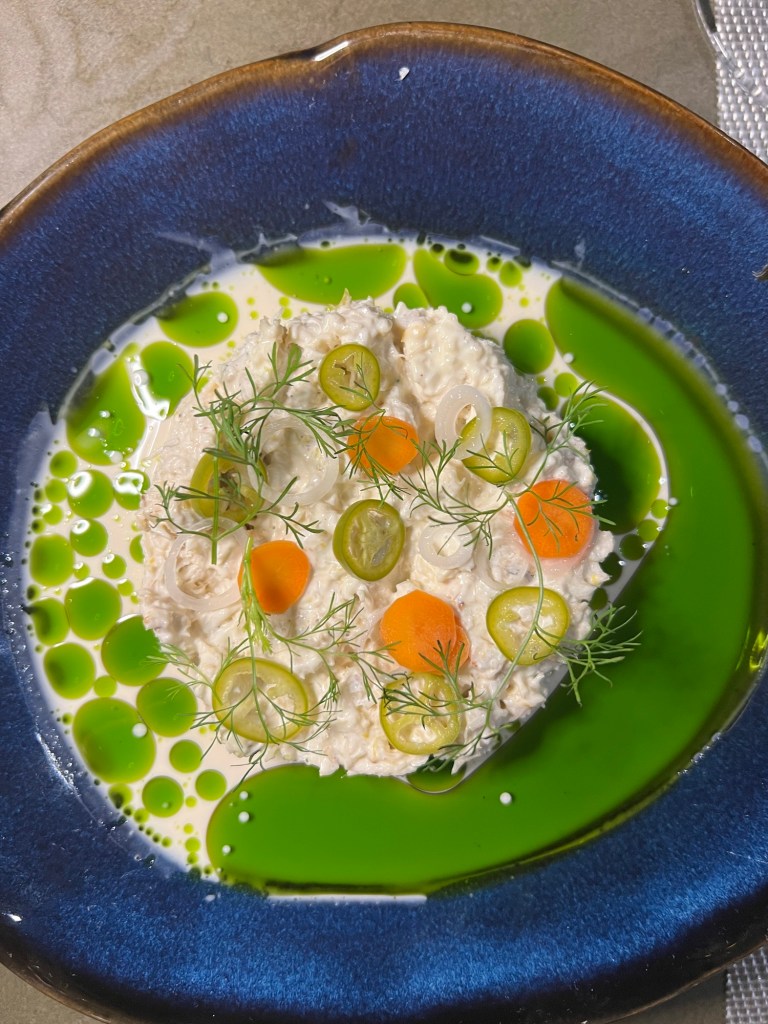
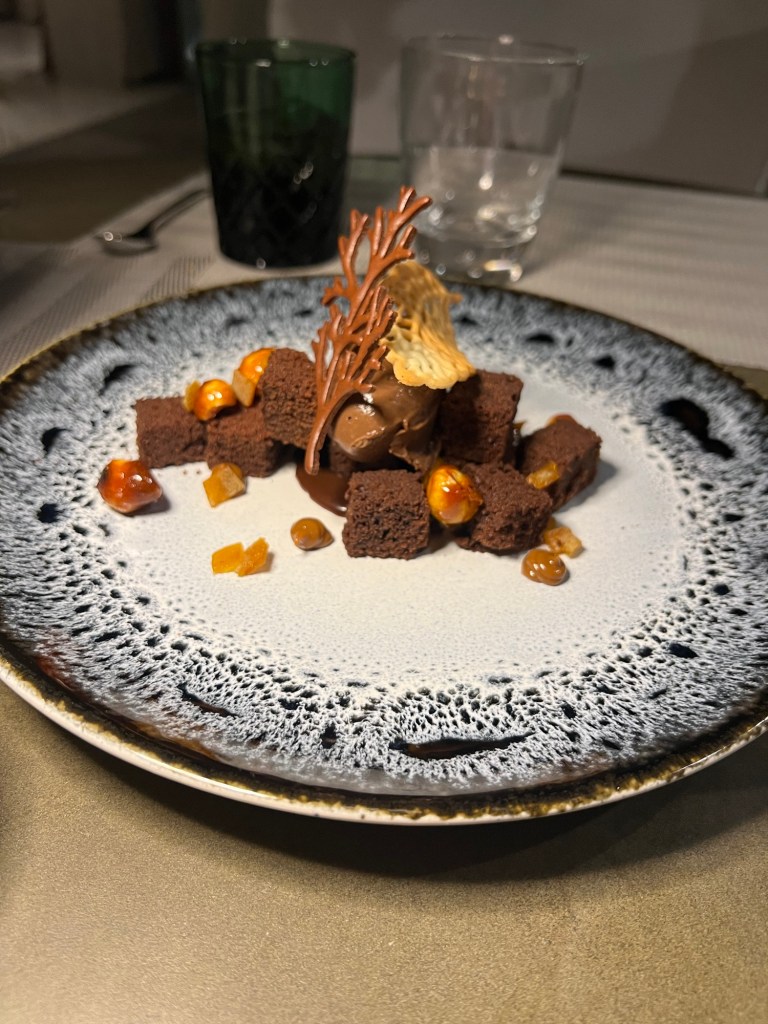
In San Miguel de Allende, there is traditional food a plenty but traveling is also about trying something new–the unexpected. For that reason, we decided to end our last night in SMDA with dinner at Moxi–what is considered to be one of the top restaurants in town and is located in Hotel Matilda, deemed by Condé Nast as one of the best hotels in Mexico. Moxi’s chef is Vicente Torres whose is an ward-wnning chef and is also no stranger to the Mexico City fine dining scene. Indeed, his Ciudad de Mexico establishment Garum is considered to be one of the best restaurants in the city, applauded for the chef’s use of local, fresh, and sustainable ingredients for his Mediterranean-inspired creations. You’ll find the same Mediterranean flair in Moxi as well while also paying homage to the delicacies of the Guanajuato/Querétaro area, including the slow-cooked pork shank enveloped in Chipotle and Achiato sauce called Chamorro en adobo pictured below. If you crave dishes more on the lighter side, I highly recommend the standout seafood and ceviche-type dish called Aguachile de Cangrejo–crab cured in the most delicious tangerine-meets-chili water concoction I have ever tasted. They serve this with crispy tostadas. Finally, the desserts were a must and with these restaurants you indulge with each course. I recommend the breaded pineapple slices with ice cream or the deconstructed chocolate brownie delight.

Critical Chica Takeaway: Not the #1 town in the world, but it’s pretty high up there
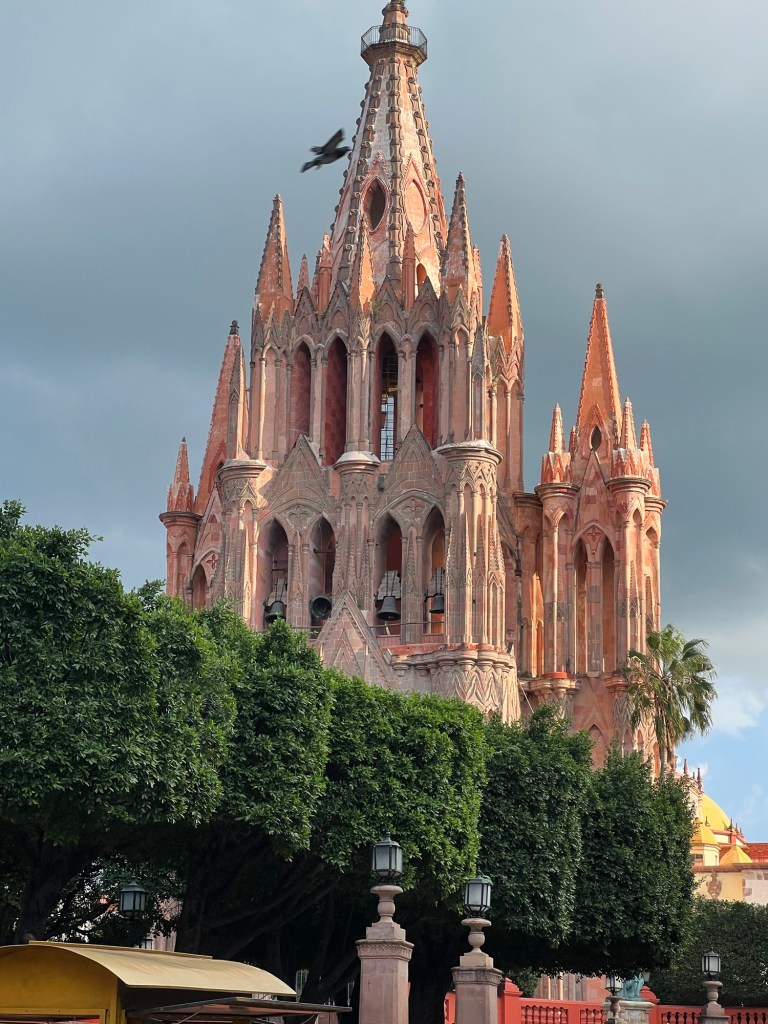

So, is San Miguel de Allende authentically Mexican and the best town in the world? And, if not, does it even matter?
One can argue that this town is not authentically Mexican because of the clear influence that the expat community of non-Mexican nationals have had on the high costs of housing and general living (some of the boutiques can be expensive!). Yet, what does it even mean these days to be culturally “authentic” when there has always been globalization and cross-pollination between both sides of the border? And, also considering that American and international tourism characterizes some of the major cities (Mexico City) and natural treasures (Cancún) in Mexico, would we dare say that those cities are not authentic?
As political theorist Benedict Anderson has argued, nations are but “imagined communities,” where members of a nation don’t necessarily need to see each other and be in the same geographical location to believe in the story that they are part of a collective community. For instance, I can’t help to think about my grandfather Ramón Quinoñez who traveled to the United States from Durango, Mexico to fill the worker shortage in the 50s/60s to work agricultural and construction jobs and that while he was miles away from my grandmother and her kids in Durango, he was still very much part of the imagined community of Durango and Mexico.
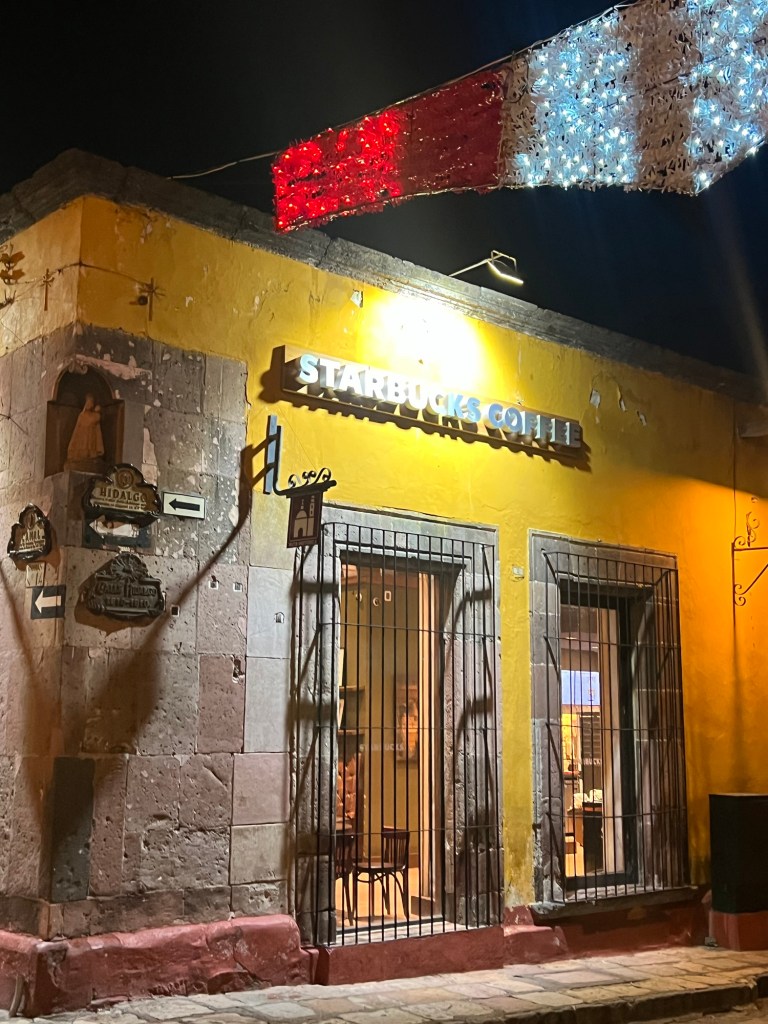
Decades later, and generations later, now we see an almost reverse migratory pattern where Americans are flocking to towns like San Miguel de Allende and Puerto Vallarta not to labor but to retire and enjoy the good life and the “warmth” of the Mexican people. They are obviously part of the American imagined community but also very much an example of being part of an upwardly-mobile and cosmopolitan international community. And when that community travels they bring along the consumer patterns that they enjoyed in their home country, including the local Starbucks establishment. I couldn’t help but snap the picture below of one of the nicest and most quaint Starbucks I’ve ever seen, housed in the corner of what was clearly a 16th-17th century colonial structure nearby the town square. There I saw the familiar and now global Starbucks branding right next to what were the remaining decorations of the Mexican Independence festivities.
But do we really want to give globalization the power to strip a town, a culture, and a nation of its authentic voice? I don’t believe that culture at this point in our history can be purely from one source or one part of the world, and just because we see a few Starbucks and expats exerting cultural influence, it doesn’t mean that the deep history and roots of a place can’t continue to endure and live within the majority of folks who have called it home for many generations. So, let’s not subscribe to the gate-keeping ideas of what is truly an authentic Mexican town and enjoy San Miguel de Allende for what it is–which is a truly charming and beautiful destination. I highly recommend you visit one day!

 Critical Chica