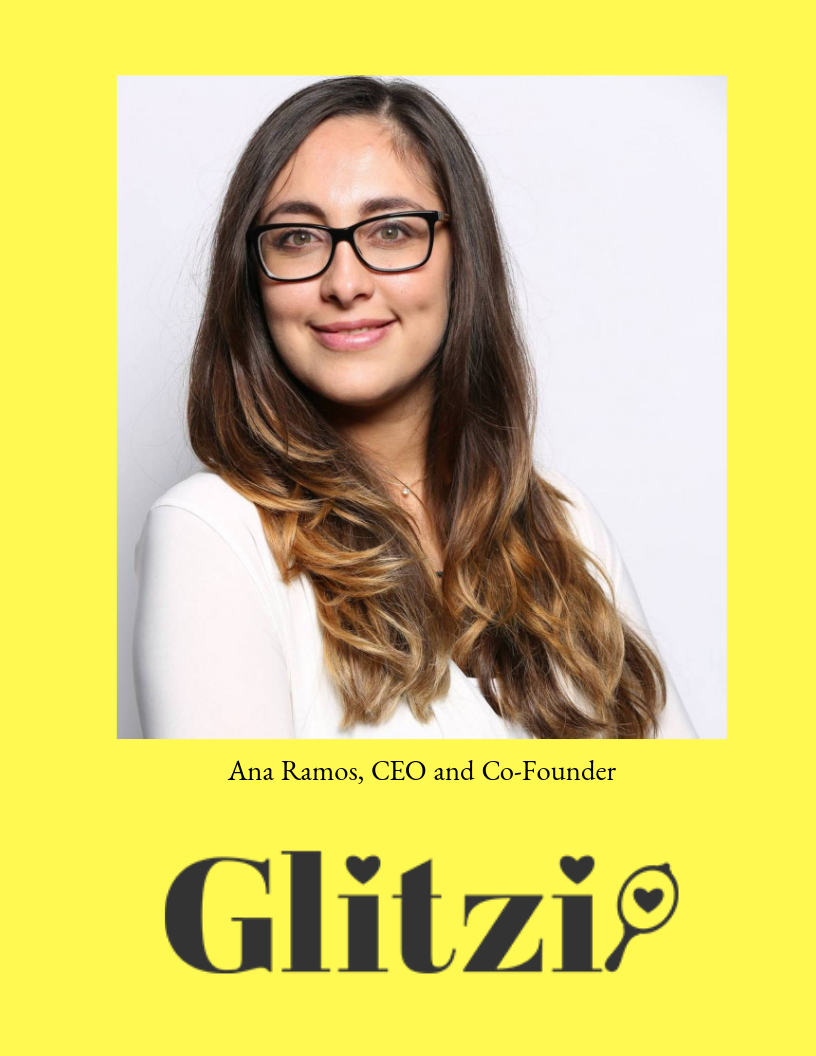
Earlier this month I had the pleasure of interviewing Ana Ramos, an entrepreneur, former VC investor, and overall trail-blazing Critical Chica to chat about her company Glitzi, an online platform that provides people in Mexico City with access to quality makeup artists, hair stylists, and other beauty professionals, helping a growing market of tech-savvy Mexican consumers avoid fashion faux pas and bad hairdos through in-home beauty services.
Ana Ramos first had the idea to create Glitzi while working as an investment manager in Germany for Vorwerk Ventures. One of the beauty companies they funded had gone bust and Ramos had a hypothesis as to why it failed. While the company’s foray into the beauty industry showed promise, it ultimately failed because the business model was not made for developing countries, says Ramos.
“It is very important to consider the different social economic factors of each country.”
Ramos, who grew up in Mexico City in the ’90s and is a beauty enthusiast herself, is familiar with the particular entrepreneurial and consumer ecosystems that exists in Latin America and developing countries. Although she studied business in the UK and worked with top VC firms in Europe, her upbringing in la capital has given her a unique vantage point to see opportunities in a growing Latin American market.


Mexico has the second largest beauty market in Latin America after Brazil. For example, the Mexican cosmetics market is worth $9.75 billion, ranking 12th in the world. While consumers are enthusiastic about beauty products and global brands, the same trust does not exist when seeking beauty professionals since hair stylists, manicurist, and other beauty freelancers in developing countries like Mexico don’t need to be certified in order to practice.
Many beauty professionals begin their careers in Mexico out of passion, polishing their craft through years of experience. According to Ramos, “in places like in Mexico, beauty professionals can actually make a decent living working for themselves even without formal training or employment.”
“They don’t have to have a license to work in a salon,” says Ramos. “So, there is a quality issue to some of these services,” adding, “what Glitzi provides to our customers is quality as well as convenience.”
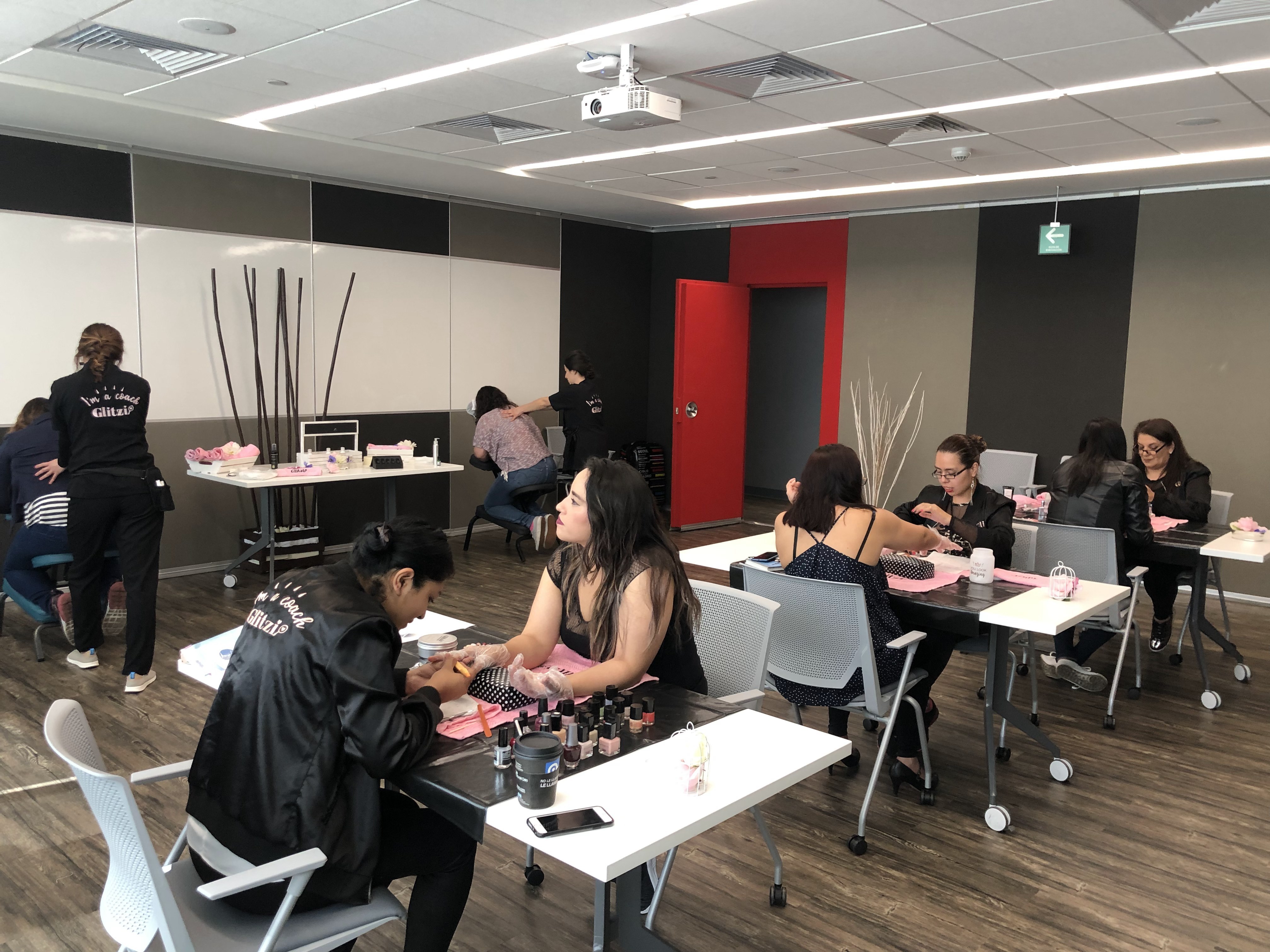
As a teenager, Ramos would find a good hair stylist or makeup artist through word-of-mouth or sometimes through sheer luck. However, this casual method would sometimes end up with disappointment at the salon.
“You know that moment when you see yourself for the first time and what they have done?” she asks, “it’s that moment when your face can’t help but show that you didn’t like it,” she laughs. It’s certainly a common experience that many of us know too well—that moment when you realize you splurged on something you didn’t necessarily love.
[Side note: this reminded me of the time I decided to get highlights for the first time in a MasterCuts salon at my local mall only to emerge with what seemed to be five chunky bronze streaks in my hair. A ‘90s Christina Aguilera look I wasn’t going for!]
For Ramos, the Glitzi girl is someone who likes to get glammed up and feel pampered either on special occasions or as part of her lifestyle. Whether a working-class girl or a cosmopolitan professional, most women want those “treat yourself” lux experiences from time to time. “The problem,” Ramos says, “is that the good beauty professionals are expensive or even inaccessible to middle-class people sometimes.”
And, if you only splurge on special occasions like a wedding or a Quinceañera, you would hope to get what you pay for, she says.
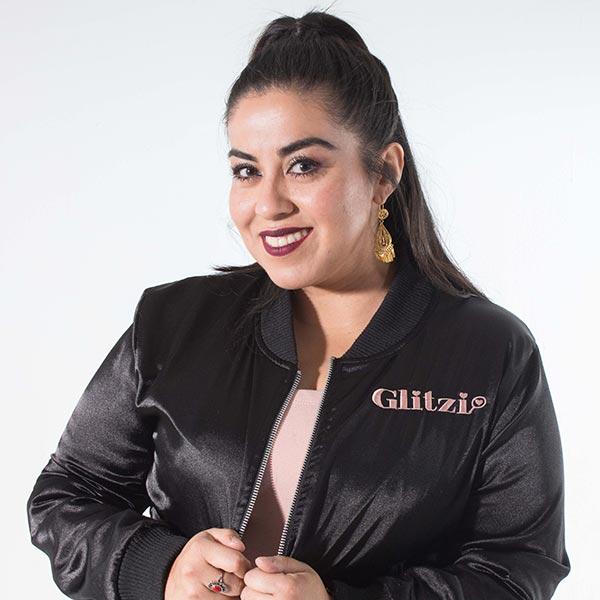
While working full-time as a VC investor in Germany, Ramos wanted to do something about making high-quality beauty accessible to women back home. In 2017, she started allocating part of her own salary toward Glitzi and gradually dedicated more hours on building a customer base in Mexico City. After working eight hours at the office, Ramos would go home and start working on Glitzi in the evenings, attending to her customers and building her company every evening from 7pm to the early morning. “Basically when Mexico was awake,” says Ramos.
After quitting her job in Germany, Ramos and her co-founder Luis Enrique Vazquez Escobar took the plunge and launched Glitzi in 2018. She had returned to Mexico City as an entrepreneur, ready to make a difference in the tech and beauty industry by launching her beauty app on a larger scale and creating the first tech-driven beauty company in Latin America.
What was supposed to be a triumphant homecoming as an entrepreneur was met with challenges, however.
Starting a business or launching a start up in Latin American has its hiccups, first as an entrepreneur and second as a woman, says Ramos, wanting to make the distinction between the two experiences.
According to Ramos, everyone at first faces the same hurtle of raising money and connecting with people who believe in you and who want to support your vision. “It doesn’t matter if you’re a woman or man, the biggest challenge in starting a company is finding the right people,” she says.
In Mexico, where the tech start-up ecosystem is not as big as places such as Silicon Valley, an individual with an entrepreneurial spirit first uses their own money or their family’s wealth to start their own businesses before raising funds from external partners. Investors are not usually keen on providing seed funding for first-time entrepreneurs.
“And if they do look at early-stage start-ups,” adds Ramos, “investors ask for things that no one would ask for in that early stage.”
Ramos also couldn’t help but notice the lack of diversity in the tech and start-up circles she came across in Mexico City—she was usually the only one in the room that looked like her. “Most of the investors here are still guys and that is still considered normal.”
And while the lack of women in these spaces was somewhat expected, Ramos was surprised by the unprofessional treatment she came across when speaking with potential partners. “It’s like no one had ever suggested something unethical at all until I started raising money,” she recalls.
“If you’re going to fund me, I want you to fund this because of my business not because of me.”
After pitching to at least 6 funds in Mexico City without any deals, Ramos and her co-founder headed to Los Angeles where they pitched to two funds. One of them was Act One ventures, who offered seed funding soon after meeting her.
“It was a good opportunity for us because there were very few start-ups in Mexico that had raised this kind of seed funding from foreign investors.” With this partnership, Glitzi became the first Latin American company funded by Act One ventures.
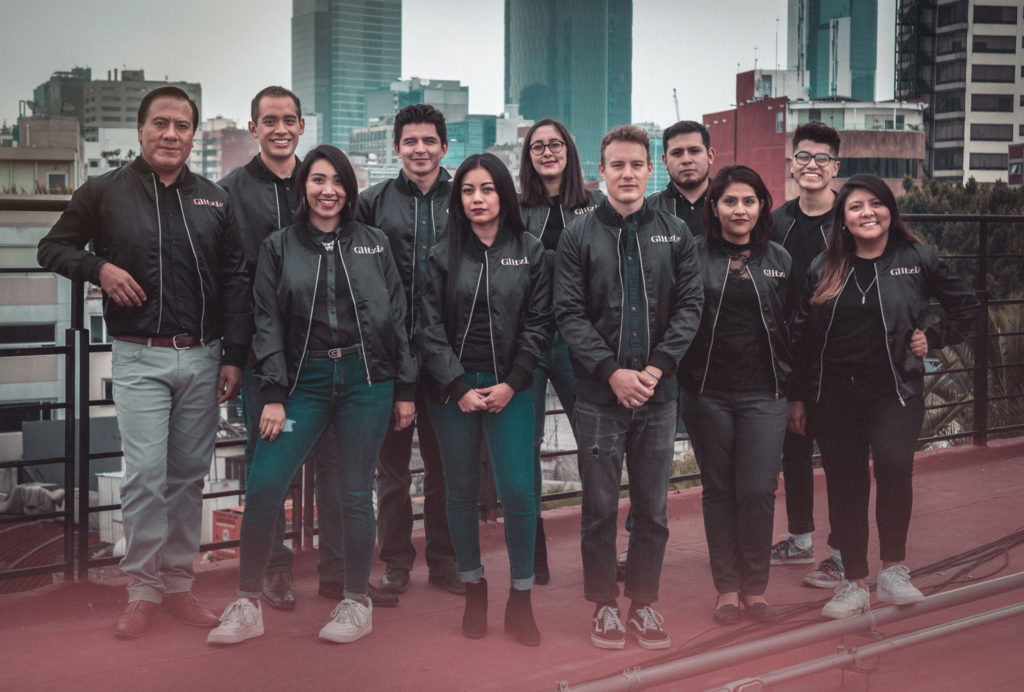
Now that they have been in business for over a year, Glitzi works with more than 80 coaches and has completed over 1,700 services, including makeup styles that one can consider Latinx or millennial looks such as the “La Cholita” hair style, the “Coachella” hairdo, or the “Latin gold” sun-kissed makeup look. Gaining reputation as a beauty platform for everyone and anyone, Ramos’ app has also been featured in In Style Magazine and the Spanish-language magazine Vanidades.

“La Cholita” hair style 
“The Coachella” hairdo 
“The Catrina” look
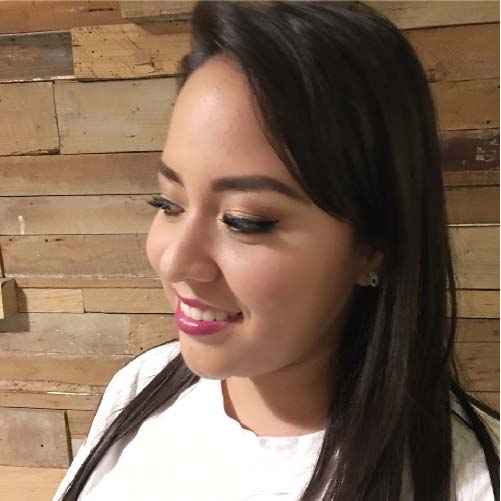
The beauty coaches who collaborate with Glitzi are also benefiting from the platform since they are polishing their craft by learning techniques that would be covered in cosmetology schools, says Ramos. “We give them a practical course together with a manual,” she adds.
“Although we’re not a university, I think at one point we will become more and more like one,” she says.

Just like she is changing the way that Mexican consumers are getting connected to top quality beauty professionals, Ramos also has her eyes set on changing the entrepreneurial game in Mexico.
“If I ever leave my company for the next chapter of my career,” says Ramos, “I would definitely like to spread knowledge on how to support start-ups, and also on how to support women entrepreneurs.”
The experiences of starting her own company in Mexico has instigated a desire in Ramos of changing the status quo that exists within Latin American start-up culture. “What happened to me in those moments didn’t make me feel bad,” she says, “it actually made me feel like we need to change things.”
“We need to professionalize this ecosystem because I saw a lot of missed opportunities for people. Investors are focusing on the wrong elements.”
“There are people who have potential to become entrepreneurs,” she says, “and I don’t want them to think that this path doesn’t exist for them.”
Thanks to Ana Ramos for sharing her story with Critical Chica and for showing our readers that this path does exist for them! If you’re interested in following Glitzi, be sure to check-out or “chequear” their latest updates on twitter.

 Critical Chica