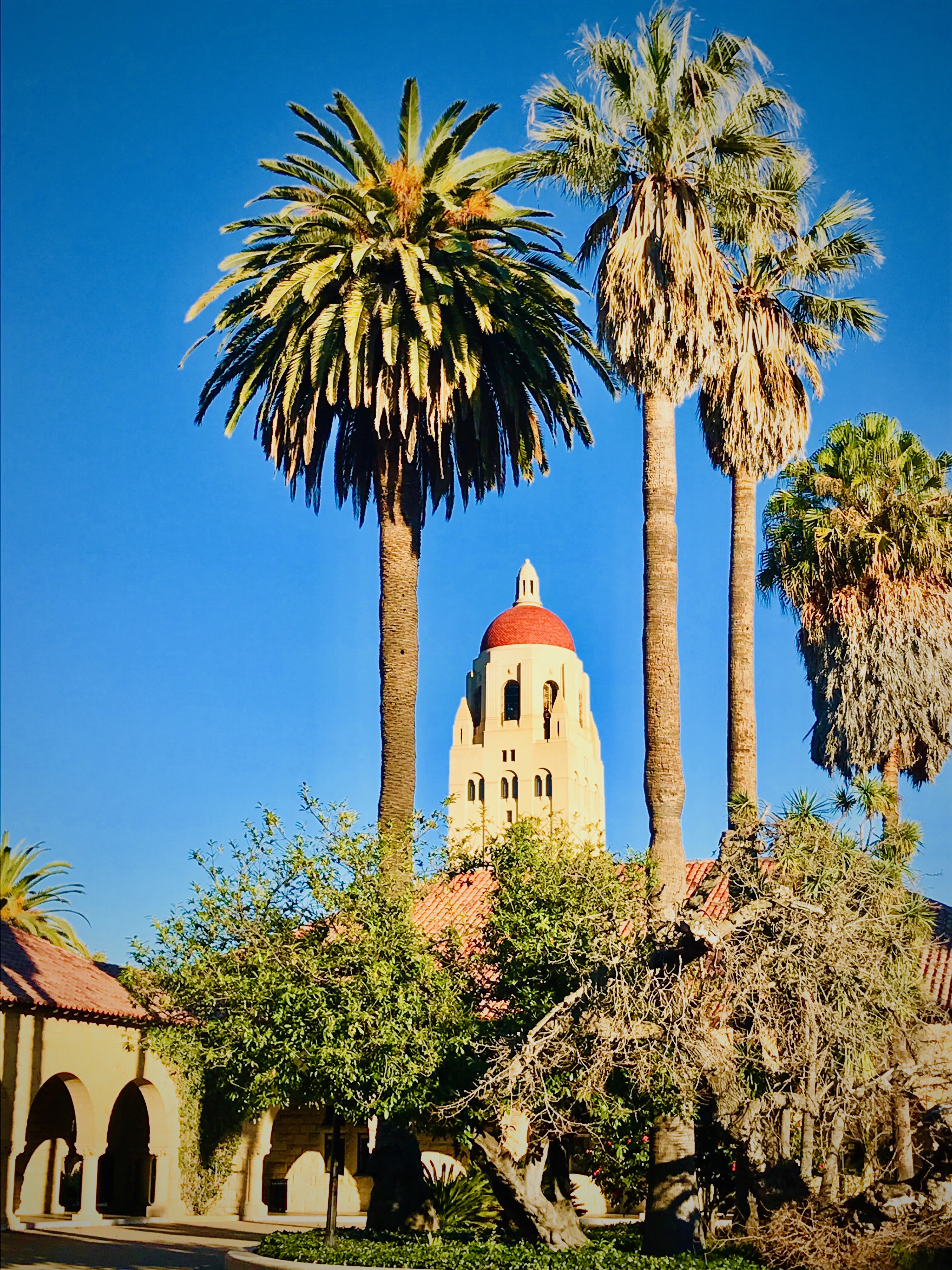
Earlier this year my friend and fellow writer Griselda Benavides asked me if I would be willing to give an interview for her book, Thirty Before Thirty: 30 Q&As from around the world on Life, Love, and Travel. She wanted to ask me about my twenties, specifically my time as an English PhD student at Stanford. Completing my doctorate was one of the hardest things I’ve ever done, especially since it coincided with the growing-pains of being in my twenties and also facing the loss of a parent (my father had passed away form Lou Gehrig’s disease during my second year in the program). Additionally, academia is known as a breeding ground for stress. As a November 2018 Atlantic article noted, anxiety sometimes goes hand-in-hand with producing research and the competitive academic atmosphere and unstructured time to completion in grad school programs can exacerbate the situation. So when my friend Griselda asked me to do an interview about my twenties I was initially reluctant. However, then I thought: Had I not learned valuable lessons during that time? And, had I forgotten that literature was actually something that I enjoyed and continue to treasure?
I decided to do the interview because perhaps students who are currently in graduate school could benefit from the lessons I learned, especially first-generation college students who find themselves looking for an academic parent as means to learn how to act and speak in graduate school, in other words, the codes of behavior that will make you successful. I certainly was looking for that academic parent figure in mentors but that strategy has its limitations. The world of academia ultimately requires you to own your authority as an expert and rewards those who have the confidence to believe that they are knowledge produces and can teach someone (including their professors and mentors!) something new and valuable. That transition from a student seeking guidance for the sake of surviving in graduate school to acting independently and thriving is a tough one but doable. As a 2018 study showed, first-gen students know that attending college is a privilege and thus express a high commitment to their education; however, when they do face academic challenges, they may struggle more than others precisely because they are navigating unfamiliar territory.
Being at a place like Stanford, surrounded by resources and the latest research, I was able to come across helpful concepts that allowed me to understand my experiences in graduate school and ultimately complete my PhD. I had the opportunity to attend a lecture by Dr. Valerie Yong on the “imposter syndrome” and why people who have achieved educational and career success feel like imposters in professional certain settings, and I also read Dr. Carol Dweck’s work on “the growth mindset” where she discusses how one’s mindset about intelligence and learning impacts performance. Both of these works shined a light on particular aspects of my own educational journey and helped me depersonalize the challenges of becoming a professional researcher. It is also important to recognize that there are systemic barriers at play that need to be addressed (i.e. shortening time to completion, making professional and academic expectations explicit, formalizing mentorship relationships, and creating various viable career paths). I hope these references and the following interview can be a helpful resource to you if you’re also on that journey!
Here is an excerpt from the interview/chapter, which you could read it its entirety by checking out Griselda’s book on Amazon. The book also features other great interviews from around the world. Thanks, Griselda, for the opportunity!
Interview excerpt for Thirty Before Thirty
I know you and your family have a close relationship, what was it like for them to learn you were admitted into Stanford?
They were so happy to hear this amazing news!
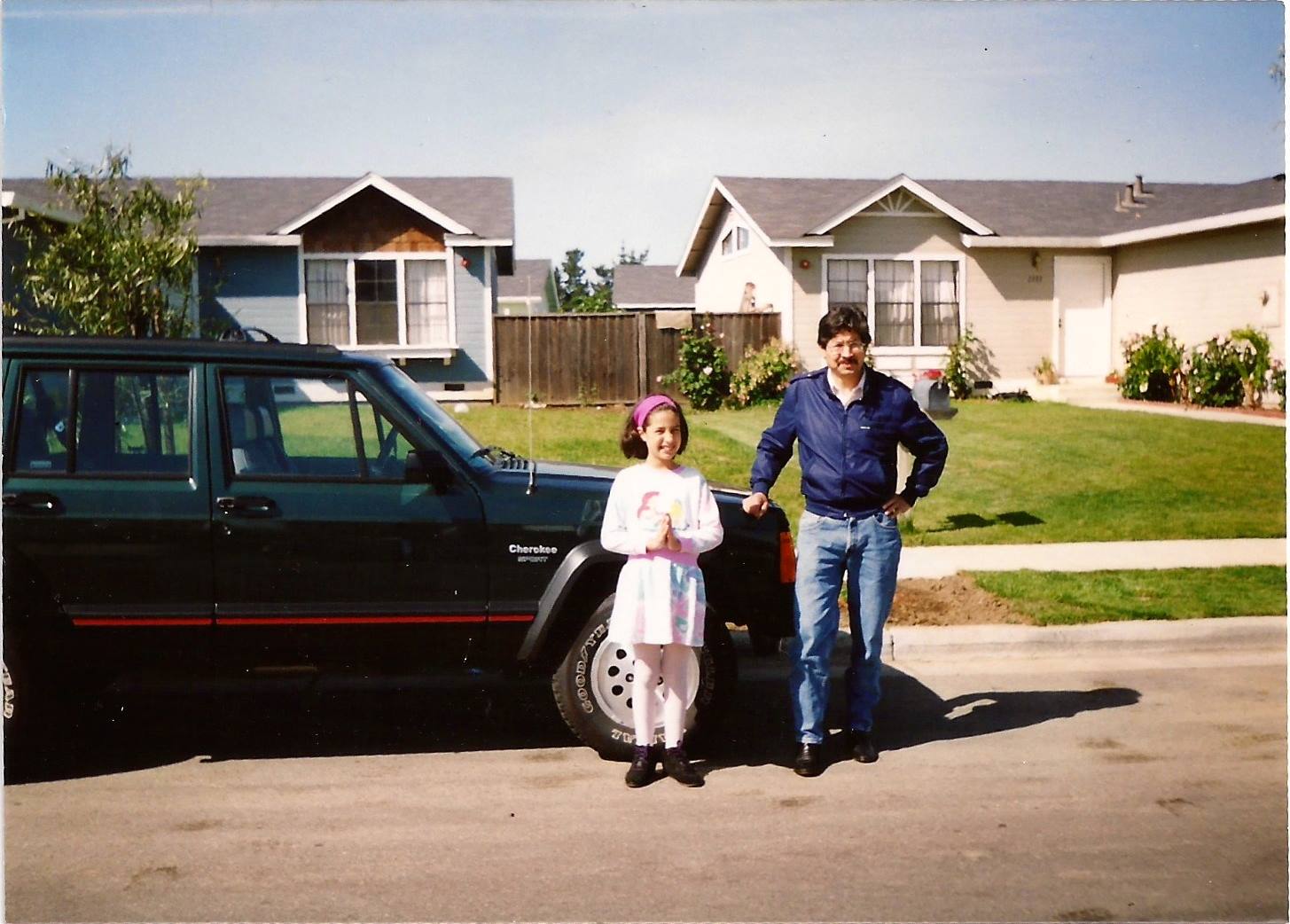
You’re right that I do come from a close-knit Mexican family. My dad is from Jalisco and my mom is from Durango, and while they did not have the chance to attend college here in the U.S., they did stress the importance of education while my brother and I grew up in Salinas, CA. Education for us held the promise of a better life. So, when I told them that I was accepted into Stanford that felt like a big win for the entire family. I remember seeing the biggest smiles on their faces and I think we did a little dance in the living room to celebrate before I started calling people.
I called my brother who was attending law school at Georgetown at the time. We’ve always been close—ever since we were young we shared a common interest in books, history, and college, and he was technically the first English major in the family so he totally appreciated the nature of what I was about to pursue.
Soon after, I notified the rest of my extended Mexican family. I have the type of family that likes to celebrate each other’s big moments and successes. From First Communions to graduations. We show each other support, and a carne asada is almost always involved in the celebration.
I remember when I went off to college my aunts gave me a new piece of luggage and a winter coat because they were excited for me and the new stage in my life. I guess they also foresaw a lot of traveling, which they weren’t wrong about.
Another moment that comes to mind is when my uncle helped me move into my first college apartment by transporting my mattress in his large white truck.
But my best memory of my family while at Stanford has to be when they came to my PhD graduation. They came from New York, Southern California, and San Jose to celebrate an achievement that I could have not done without their love and support.
Oftentimes children have a clear idea of what they want to be in life and everything else that pertains to it. Some at a very young age even wear clothing the name of a specific college.
Were you one of those kids?
Was it always your idea to attend Stanford?
I was definitely not one of those kids. While my parents talked about the importance of doing well in school, we never talked about universities and their rankings. I think that is very common for first-generation college students. In a way, this worked to my advantage because I didn’t have that pressure of only imagining one specific school or pursuing one specific path.
I think that would have been too much pressure—to fixate on only elite colleges from a young age.
Not being groomed from the beginning for elite colleges gave me the liberty and self-motivation to eventually pursue this path on my own.
As a young girl, I only had a sense that I wanted to go to college because I wanted to explore the world outside of Salinas and also build a better future for myself and my family. My older brother, who was the first one to attend college at Berkeley, created that path towards higher education and upward mobility in our family and I continue to admire him for that pioneering sensibility.
When I was trying to figure out my own path towards college in the beginning of high school, I had told myself that the answer was somehow in reading books. I didn’t think about the kinds of books or why that was a good strategy, but it just made sense to me that the more books I read, the better.
Not exactly the kind of college prep strategy that you would find in The Princeton Review, but I felt compelled nonetheless to read as many books that I could get my hands on. My specific plan was to try to read 100 pages a day. It was a big goal but I knew that I needed to challenge myself and go after, what seemed at the time, far-reaching goals.
I started reading the canonical works, from Shakespeare and Herman Melville, to Harper Lee and Toni Morrison. I loved it. I also read anything else I found at the local library, including magazines like Vanity Fair, Rolling Stone Magazine, and YM(hey I was still a teen!). I just wanted to read. And not surprisingly, my writing improved and I started to receive high marks on my English papers.
I also started doing well in my other classes. With literature, I had found something that I was passionate about, and it was the perfect outlet for me as a teen since reading had allowed me to see different worlds and learn about different life paths that I didn’t get to see while growing up in Salinas.
[…]
As an alumni, what do you think we should know about Stanford? What were the best lessons that you learned at Stanford that weren’t taught in a classroom?
I learned the best lessons outside the classroom.
Pursuing a PhD is a marathon and difficult for most students since research forces students to become producers of knowledge, which requires expertise and also a sense of ownership over that expertise.
It’s a major shift from the undergraduate experience when students are expected to only absorb and relay knowledge.
As a Latina, I was grateful to have worked with both Paula Moya and Michele Elam, both English professors at Stanford who modeled what it was like to be a woman of color, intellectual, and knowledge-producer.
Living in a world where we don’t see a variety of representations of women of color depicted in the mainstream media, it was important for me to have role models […]
[…] Advice I would give young students about to pursue academia is to be more self-accepting of your own particular background, especially if you come from a background that doesn’t quite “fit the mold” of what we think of as intellectuals, scientists, researchers, professors, writers, etc. (even though we know that what we think of as “the mold” is a social construction).
During the first few years of graduate school, I was struggling with how to balance family responsibilities with academic obligations as my father was battling with ALS.
My parents had eventually moved from Salinas to San Jose, so when I started Stanford I was only a short car ride away from visiting him.
I would be reading Immanuel Kant’s Prolegomena to Any Future Metaphysics for a grad seminar one day and then visiting East San Jose during the weekends so I could go on walks with my father around Lake Cunningham.
Or, I would be setting up appointments with professors to visit them during office hours, while also setting up appointments to see doctors at UCSF.
During that time, my intellectual and emotional energies were very much split between two very disparate worlds.
I then became worried that because of my atypical graduate school experience I wasn’t quite “fitting in” and would be at a disadvantage for not being completely immersed in the world of literature and literary theory.
But then, I realized, that I didn’t have to see those experiences of not completely fitting in, that were probably common to many people, in a negative light.
As my friend once told me, I didn’t have to “knock-it.”
No one really has a typical educational track or career track anyways.
Additionally, I also felt empowered when I started looking for the advantages that do come from learning how to be resilient and resourceful in the face of challenges. And I learned how to engage with different communities and social spaces.
Whether you’re a daughter of immigrants, first-gen student or hail from another diverse background, you’re in a position to contribute to these academic, intellectual spaces in very unique ways since these points of views are often underrepresented.
Also, realizing that I am part of a small percentage of Latinas who have a PhD motivates me to share the knowledge that I learned while in graduate school and to continue to create opportunities for the next generation.
The more self-accepting I became of my own path, the easier it was for me to focus on the goals that I wanted to achieve and to think about how I wanted to make an impact in the world.
Other lessons learned?
[…] There is a point in graduate school or just in one’s general maturation as an adult where relying on encouragement or positive feedback will no longer be productive. If the quest is to continue growing and learning—which is what becoming a good scholar and researcher is all about—then looking for validation from others for approval will stymie that process.
I learned that when writing a dissertation. The first drafts will most likely not be excellent, and you will come across challenges and failures when completing such a lofty project.
For this reason, internal motivation—wanting to do better for yourself and for your own growth—is the best type of guidance you can have while writing or attempting to achieve something difficult.
Graduate school should be about learning how to pursue your goals and overcome setbacks that will inevitably arise by using your own internal compass while also hearing feedback from others. Some questions that you could ask yourself are:
“Why is this work important to you?”
“Why do you want to accomplish it and for what purpose?”
“What steps do you need to take to reach your goal?”
“Did you put in the work and ask for help when you needed it?”
“Though it’s not perfect, did you do your best?”
Where were you at 30 years old? What stage of your life were you in? What would you recommend to those turning 30 this year (2018)?
At 30 I had my PhD in tow and was teaching an Asian American literature course at a local community college and also working in outreach and diversity. I was in the midst shaping the next phase of my career and deciding what I was going to do with my degree. You think that by then you have everything figured out but really you only continue to learn and grow.
I had been a very studious person in my 20s so I was looking forward to taking a step back in my 30s and enjoying what life has given me so far […]. If I were to give advice to my younger self (or someone turning 30), I think I would tell her that she’s going to be fine. Relax, enjoy, love, be grateful, and embrace what life throws your way so you can make something great out of it. You got this.

 Critical Chica