“What’s in a name? That which we call a rose
By any other name would smell as sweet.”
Shakespeare, Romeo and Juliet (II, ii, 1-2)
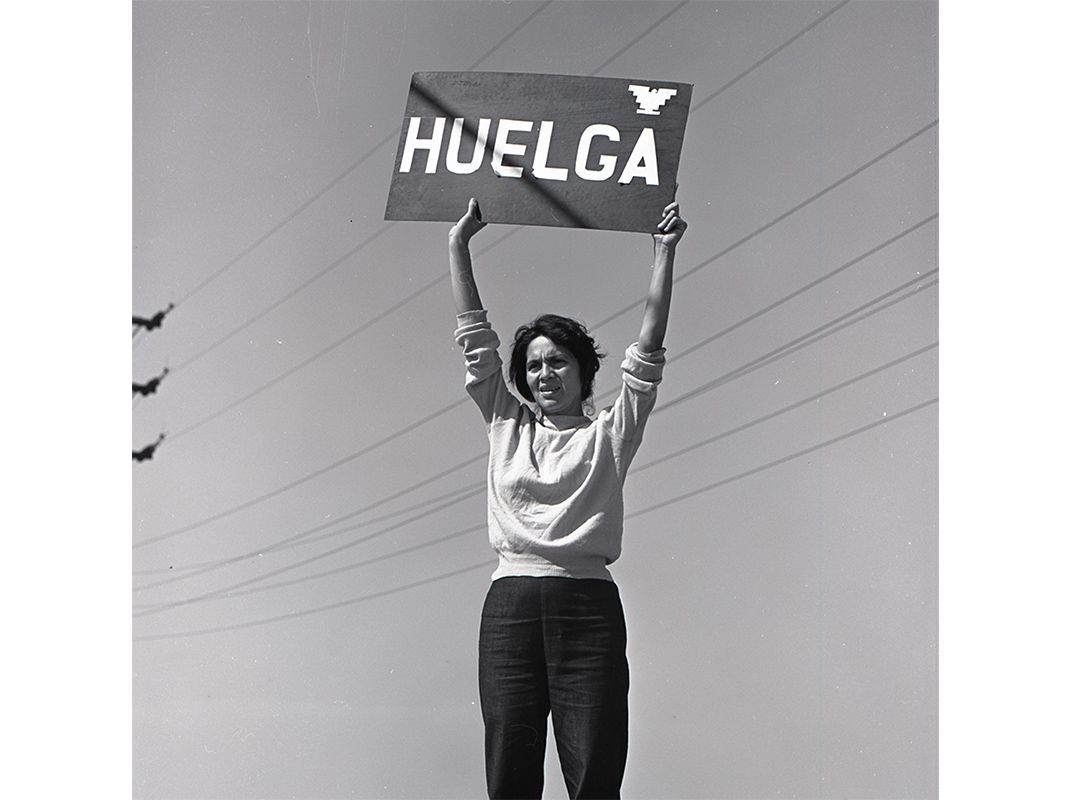
I looked up the word “Chicana” in the Merriam-Webster dictionary and this is what I found: “An American woman or girl of Mexican American descent.” While that is technically correct (and I give M-W major props for including it), the definition also misses the larger social and political significance of this word. The word “Chicano” came of age in the mid-1960s during the Civil Rights movement, when a new generation of Mexican Americans fought for equal rights and justice, subsequently asserting their placement in American history while also reclaiming an indigenous past. This political identity allowed Mexican Americans to express their desire to have the same opportunities and freedoms as everyone else while also delivering a firm critique of U.S. colonialism.
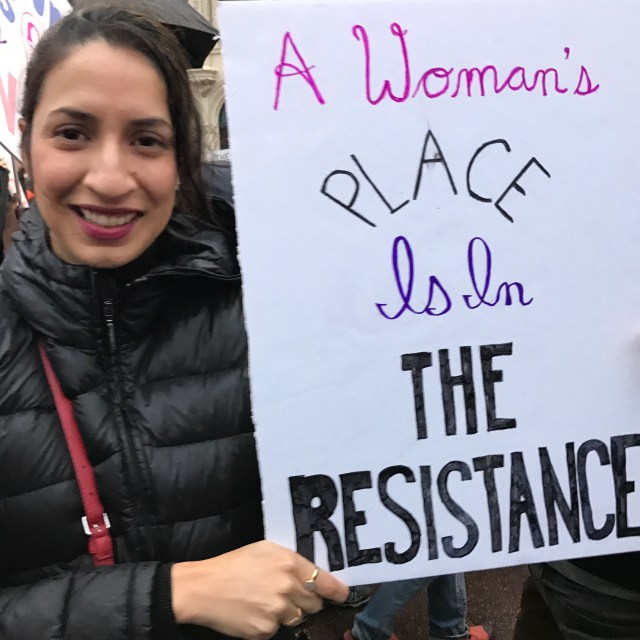
Then we entered the 1970s and 1980s and the struggle for rights was further enriched by the feminist movement, especially second and third wave feminism, in which female writers, artists, and activists gave a recognizable voice to what it means to be a woman of color or a “Chicana.” This new historical figure is a socially-conscious Mexican American woman who brings the necessary critical eye to her own culture as much as she does for mainstream culture, illuminating the various systems of oppressions that continue to relegate many voices to the margins. Fast forward through the 1980s, the 1990s, and early 2000s (and, sorry reader, this is like really X8 fast forward!), we have the post-colonial movements across the globe, the transitioning of popular labels from “Hispanics” to “Latinos” and now to “Latinx,” signaling an impulse to create a gender-neutral language that includes all of our people with many identities and ties to Latin America, and, finally, the arrival of a 21st-century Latinx solidarity and political activism that has been re-energized to protect our vulnerable communities during this Trump Era. While there is not one term or label that captures the many identities that people of Latin American descent occupy, it is good to know that there is a rich historical example of a community actively changing and creating a new cultural landscape for future generations.
I have done my best to give a historical overview of the changes within the Latinx community over the last couple of decades and how the Chicana came to be. I felt compelled to provide a short overview since, after all, this blog is in some ways a celebration of this history but also an exploration of how a Mexican American California girl like myself who came of age in the 90s listening to Hip Hop and Brit pop can write about being a 21st century Chicana. I spoke Spanish at home and Selena continues to be one of my favorite artists. I also grew up in a working-class immigrant neighborhood and know what it’s like to struggle financially, but I also now have very middle-class (might I say even bougie) experiences and tastes that include trying the latest Blue Apron recipe and signing up for a wine club membership in Napa Valley. I also love a lot of Bravo! network TV shows but that has more to do with my taste for bad mainstream reality TV and less to do with a bon vivant lifestyle. Anyway, I know these are not mutually exclusive interests or experiences, but what does this mean to be a woke Latina in today’s world?
Full disclosure: this blog won’t really theorize the complexities of Mexican American history or identity. There are a lot of scholars out there who do a wonderful job of explaining the existential nuances of contemporary Latinx identity. One can start by reading Jennifer Harford Vargas’ Forms of Dictatorship: Power, Narrative, and Authoritarianism in the Latina/o Novel (2017), to learn about the ways in which the entangled political histories of the US and Latin America continue to impact contemporary Latino communities in this country. Or, one can look to Elda María Román’s Race and Upward Mobility: Seeking, Gatekeeping, and Other Class Strategies in Postwar America (2017) to begin to understand the intersection of racial and class identities and how the struggles of a middle-class Latino experience continues to illuminate structural inequalities in today’s supposedly post-race world.
The idea for this blog came to me after finishing my PhD and realizing that as much as I loved nerding out on critical and narrative theory because it helped me understand the human condition a bit more, I also wanted to feel more content and joyful. Unfortunately academia was not giving me that joy. Indeed, not surprisingly, the topic for my dissertation on post-sentimental Latino novels was inspired by a twenty-first century Chicano avant-garde novel about sad Mexicans in LA who revolt against the fictional author and also against the “commodification of [their] sadness” as a critique of the insidious nature of late-capitalist culture. (Amazing novel by the way!). This led me on an intellectual journey into Sigmund Freud’s theory of melancholia, Raymond William’s concept of “structures of feeling” to describe the emergence of new cultural forms, an into an examination of the history of loss and trauma within the Mexican American community. Thus, after graduate school, I was ready for something new.
With the advent of conferences and platforms like Beyond Academia and Versatile PhD, it is clear that I wasn’t the only one that thought maybe there are other paths that can satisfy the life-long learner and intellectual but with happier returns. And there is also an interesting discussion surfacing in the cultural landscape about the need to represent more joy and happiness in the lives of people of color. The Black Joy Project started by Kleaver Cruz, which frames black joy as an act of resistance, is certainly inspiring and it makes me wonder what that would look like within the Latino context. But I also think that an obsessive cultural focus on happiness can sometimes lead to less happy results. Perhaps we can celebrate all the moods and gradations of life, from our blue periods to the rosier ones?
With this blog I hope to bring a different angle to the 21st century Chicana experience by writing about my personal experiences and what I’m critical about but also what I enjoy. As a critical Chicana, I consider myself to be socially and politically aware—I want to know enough about the world so that I can thoughtfully participate in it and try to make it better for the next generation. But I also think that being a critical chica also means to just BE—whatever that means to you! This blog is a celebration of the little things in life that I get excited about it, and what moves me, and the stories and tips that I think some other folks might enjoy. I happen to love travel, fashion, pop culture, and puns. So that is what this blog will be mostly about. The “Chic” in Chic-ana and in Chic-a alludes to this love of glamour, fashion, and language, while recognizing that such a luxury of having a good time on this platform (which I plan on doing!), and enjoying some of the middle-class comforts, would not be possible without the good fights that have been fought in history so that a California chica like myself could write for herself and others.
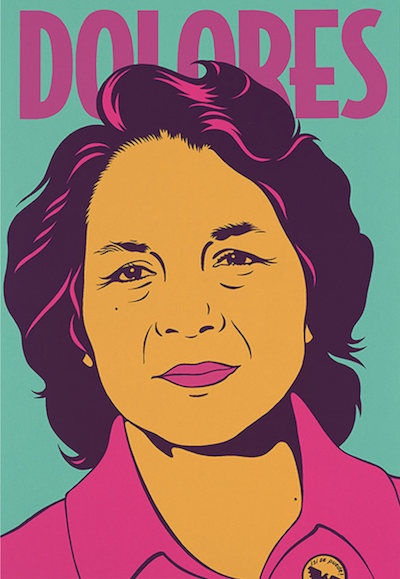
References: Dolores Huerta Image was taken from Smithsonian Institute.

 Critical Chica